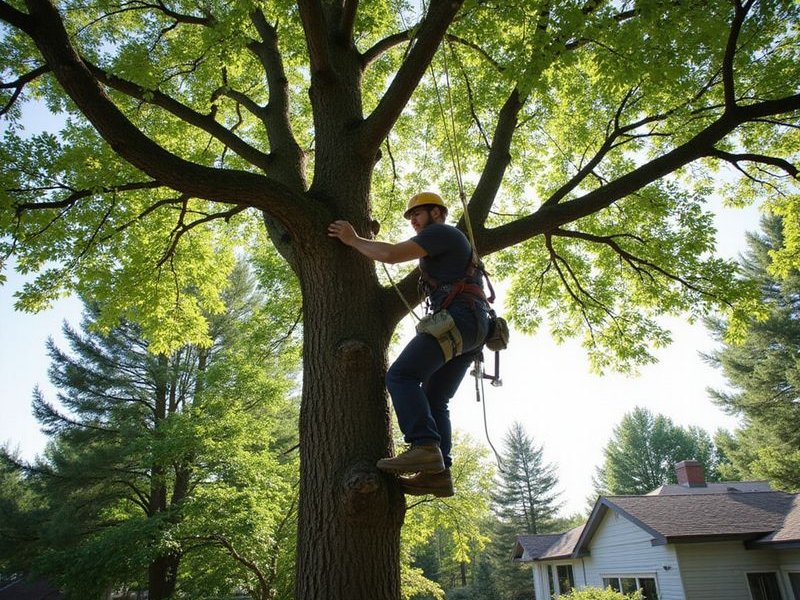
Tree Cabling & Bracing in Duluth, MN
Professional tree cabling and bracing in Duluth, MN. Dynamic and static cabling systems, brace rods, and structural support to preserve valuable trees.
What Is Tree Cabling and Bracing?
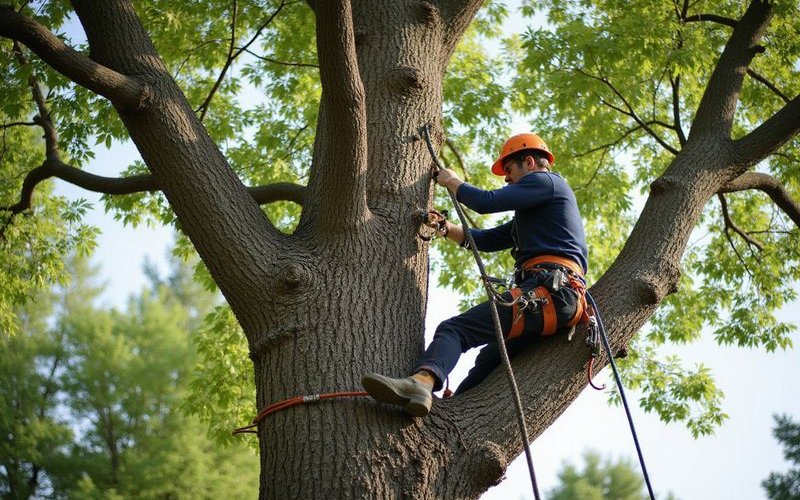
Tree cabling and bracing are structural support techniques that reduce the risk of failure in trees with significant structural weaknesses. Instead of removing a valuable tree because it has a split trunk, co-dominant stems, or overextended limbs, a properly designed support system can preserve the tree for decades of additional safe service.
At Northshore Tree Service, ISA Certified Arborist Erik Janssen evaluates trees for structural defects and designs support systems that address the specific weakness without compromising tree health. Not every structurally compromised tree is a candidate for cabling — some are genuinely too far gone and need to come down. But many trees that other companies would immediately recommend for removal can be preserved with professional structural support, saving homeowners thousands of dollars and preserving irreplaceable landscape character.
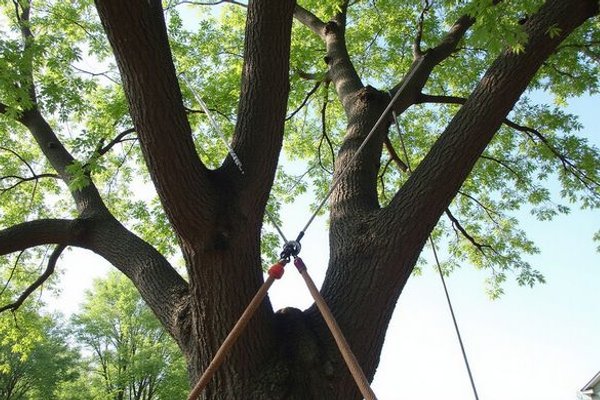
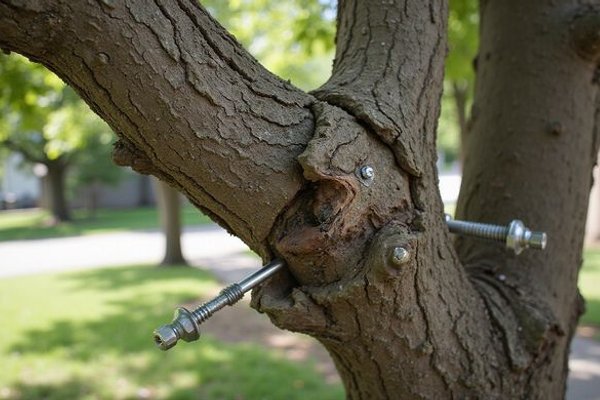
Cabling involves installing flexible or rigid cables between structural components of the tree — typically between co-dominant stems or from an overextended limb to a stronger anchor point higher in the canopy. Bracing uses steel threaded rods that bolt through split crotches or weak attachments to physically hold the tree together. These techniques are often used in combination with pruning to reduce weight and wind resistance on the supported structure.
When Trees Need Structural Support
Co-Dominant Stems
Co-dominant stems occur when a tree develops two or more main trunks of roughly equal size instead of a single central leader. The junction between co-dominant stems often contains included bark — bark trapped inside the joint that prevents the wood from fusing together properly. This creates a structurally weak attachment that is highly prone to splitting, especially under wind and ice loads.
Co-dominant stems are extremely common in Duluth’s urban trees, particularly in species like maple, birch, and elm that naturally tend toward multiple-stem growth. Many of these trees are large, mature specimens that provide tremendous canopy value to their properties. Cabling provides the supplemental support that keeps these trees standing safely through Duluth’s severe weather.
Overextended Limbs
Some trees develop individual limbs that grow disproportionately long and heavy relative to their attachment. These overextended limbs act as levers, putting enormous torque on the attachment point during wind events. In Duluth, where Lake Superior storms generate powerful gusts, overextended limbs are a significant failure risk.
Cabling supports overextended limbs by connecting them to stronger sections of the tree higher in the canopy. This redistributes the load and prevents the limb from breaking free. Combined with weight-reduction pruning at the branch tip, cabling can reduce failure risk by 90% or more.
Split or Cracked Trunks
Trees that have partially split — whether from storm damage, internal decay, or the progression of a weak co-dominant junction — may still be viable candidates for repair. Brace rods installed through the split, combined with cables above the split point, can hold the tree together and allow the wound to begin closing. This approach requires careful assessment — not every split can be repaired, but many can.
Lightning Damage
Lightning strikes can split trees vertically, blowing bark and wood away from the trunk. If the structural damage is limited and the tree retains enough vascular connection to survive, cabling and bracing can stabilize the tree while it recovers. Lightning-struck trees should always be evaluated by an arborist before any support decisions are made.
Dynamic vs. Static Cabling
Dynamic Cabling Systems
Dynamic cabling is our preferred approach for most applications. Dynamic cables are made from high-strength synthetic materials (typically polyester or polypropylene) that stretch slightly under load, absorbing shock forces and allowing the tree to move naturally in the wind. This natural movement is important because it stimulates the tree to develop its own structural wood (reaction wood) in response to mechanical stress — essentially making the tree stronger over time.
Dynamic cables are installed without drilling or bolting into the tree. They typically use sling-type attachments that wrap around branches or stems, minimizing any damage to the cambium. This non-invasive installation makes dynamic cables the preferred choice for healthy trees with manageable structural issues.
Dynamic cable systems are designed for a 7 to 10 year service life and should be inspected annually. They are replaced as needed during routine maintenance visits.
Static Cabling Systems
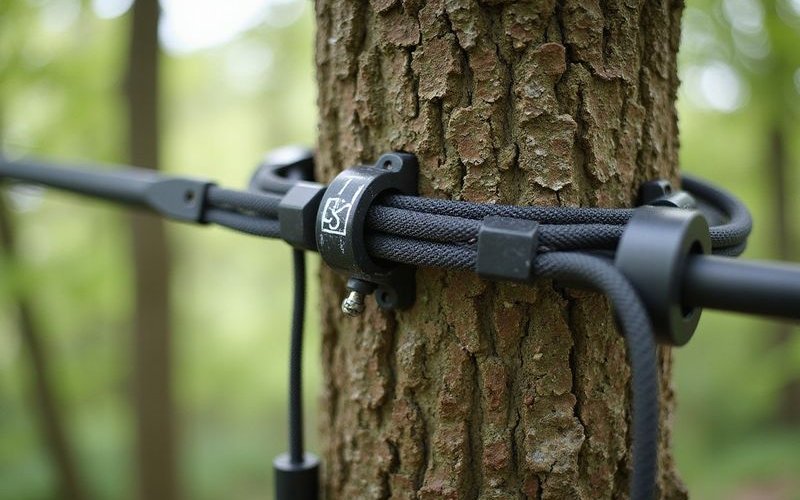
Static cable systems use steel cable with lag-eye bolts or J-hooks anchored directly into the tree’s wood. These rigid systems limit movement of the supported structure and are used when maximum restraint is needed — typically for splits, severe co-dominant stem separations, or high-risk situations where dynamic cabling alone cannot provide sufficient support.
Static systems require drilling into the tree, which creates wounds that the tree must compartmentalize. Properly installed, these wounds heal well and the hardware becomes embedded as the tree grows. Improperly installed hardware — wrong bolt size, wrong placement, wrong depth — can cause decay and actually weaken the tree. This is why ISA Certified Arborist installation is essential.
Brace Rods
Brace rods are steel threaded rods that pass through the tree trunk at or just above a weak crotch or split point. They physically hold the two sides together, preventing the split from opening further. Brace rods are almost always used in combination with cabling above the split to create a complete support system.
The rod is installed by drilling through the trunk, inserting the threaded rod, and securing it with washers and nuts on both sides. The tree grows around the rod over time, fully incorporating it into the trunk structure. Brace rods are permanent installations that do not require replacement.
Why Cabling Is Worth Considering
The economics of cabling versus removal strongly favor cabling when the tree is a viable candidate. A complete cable system for a large tree typically costs $600 to $1,500. Removing the same tree might cost $3,000 to $8,000 through our tree removal service, plus the cost of stump grinding, site restoration, and the loss of a mature tree that took 50 to 100 years to grow.
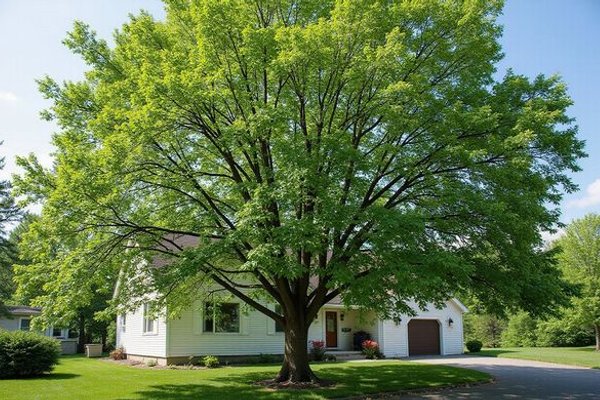
Beyond the financial calculation, mature trees provide tangible benefits that younger replacements cannot match for decades: deep shade that reduces cooling costs, wind protection, noise buffering, wildlife habitat, and the character that large trees give to a property. A 60-year-old maple in your front yard is worth far more than the $8,000 it would cost to remove — its replacement value to property aesthetics and function is measured in tens of thousands.
That said, cabling is not appropriate for every tree. Trees with extensive internal decay, advanced root disease, or structural damage beyond what supplemental support can manage should be removed. Our arborist is honest about the limitations — if a tree cannot be safely preserved with cabling, we tell you and recommend removal instead.
Cabling and Pruning: A Combined Approach
Cabling and pruning are complementary treatments that work best together. Pruning reduces the weight and wind resistance of supported limbs, decreasing the forces that the cable system must handle. Crown thinning allows wind to pass through the canopy rather than catching it, reducing overall structural stress. Deadwood removal eliminates branches that could fall and damage cable hardware.
We design integrated support and pruning programs for trees that need structural help. The initial installation typically includes pruning to reduce immediate risk, with follow-up pruning scheduled on a 3 to 5 year cycle that maintains the benefits over the long term.
For trees with health concerns beyond structural issues, our tree health and disease treatment services address root disease, pest infestations, and other conditions that can compromise a tree’s ability to support itself.
Schedule a Structural Assessment
If you have a large tree with a split trunk, co-dominant stems, overextended limbs, or other structural concerns, call Northshore Tree Service at (218) 555-0391 for a professional structural assessment. Erik Janssen will evaluate the tree, determine if cabling and bracing is appropriate, and provide a clear recommendation with pricing. There is no charge for the initial assessment, and no obligation. We serve Duluth, Hermantown, Proctor, Two Harbors, and the greater North Shore area.
Our Work
What's Included
- Dynamic cabling systems (flexible, shock-absorbing)
- Static cabling for specific limb support
- Steel brace rods for split crotches
- ISA Certified Arborist assessment and design
- Annual inspection and maintenance
- Preserves trees that might otherwise need removal
- Reduces storm failure risk
- Compatible with ongoing pruning programs
Get a Free Estimate
Call our ISA Certified Arborist for a free on-site assessment. Same-day estimates in Duluth.
(218) 555-039124/7 Emergency Service
Cabling & Bracing Pricing
Price depends on tree size, number of cables, and system complexity
Single Cable System
- One dynamic or static cable
- Hardware rated for tree size
- Professional installation
- First-year inspection included
Multi-Cable System
- 2-4 cables as needed
- Brace rods if required
- Complete structural support plan
- Annual inspection included
Complex Support System
- 5+ cable system
- Multiple brace rods
- Combined pruning program
- Multi-year maintenance plan
How It Works
Structural Assessment
Our arborist evaluates the tree's structural weaknesses — co-dominant stems, included bark, overextended limbs, split crotches — and determines if cabling and bracing is appropriate.
System Design
We design a support system tailored to the tree's specific needs, selecting cable type, placement points, and hardware ratings based on the forces involved.
Professional Installation
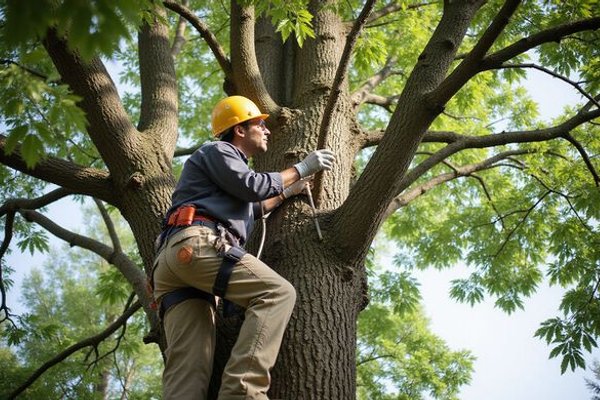
Cables and braces are installed by our trained crew using ISA-standard techniques and commercial-grade hardware. Installation is done from the tree, not from the ground with a slingshot.
Annual Inspection
Cabling systems require periodic inspection to check hardware integrity, cable tension, and tree growth. We include the first annual inspection and recommend ongoing monitoring.
Why Choose Northshore Tree Service
ISA Best Practices
We follow ANSI A300 supplemental support standards. Cable placement, hardware selection, and system design are based on arboricultural science, not guesswork.
Save Trees, Not Remove Them
A properly cabled tree can provide decades of additional safe service. This preserves your landscape's most valuable assets and avoids the cost and disruption of removal.
Modern Dynamic Systems
We primarily use dynamic cabling — flexible systems that allow natural tree movement while preventing catastrophic failure. Better for tree health than rigid static cables.
Combined with Pruning
Cabling works best alongside proper pruning. We design integrated support and pruning programs that complement each other for maximum tree longevity.
Cabling & Bracing FAQ
What is tree cabling?
Tree cabling is the installation of flexible cable systems high in the tree canopy to reduce the risk of structural failure. Cables connect co-dominant stems or overextended limbs, distributing loads and preventing the tree from splitting apart during wind and ice events.
When is cabling better than removal?
Cabling is appropriate when a tree has structural weaknesses but is otherwise healthy and valuable. If the tree has good vigor, sound wood, and the structural defect can be managed with supplemental support, cabling preserves the tree at a fraction of the cost of removal and replacement.
How long do cable systems last?
Modern dynamic cable systems are designed to last 7-10 years before needing replacement. Static cable hardware lasts longer but requires regular inspection. All systems should be inspected annually by an arborist to verify integrity.
What is the difference between dynamic and static cabling?
Dynamic cables are flexible, allowing the tree to move naturally in the wind while preventing catastrophic over-extension. Static cables are rigid steel systems that limit movement of specific limbs. We prefer dynamic systems for most applications because they promote natural strength development.
Will cabling damage my tree?
Properly installed cabling does not damage trees. Modern dynamic systems use non-invasive attachment methods. Brace rods do penetrate the wood but are installed using techniques that minimize decay risk. An improperly installed system can cause damage — which is why ISA Certified Arborist installation matters.
Do cabled trees need pruning too?
Yes. Cabling and pruning work together. Pruning reduces weight on overextended limbs and removes dead branches, while cabling provides structural support for weaknesses that pruning alone cannot address. We design combined programs for optimal results.
Related Services
Tree Health & Disease Treatment
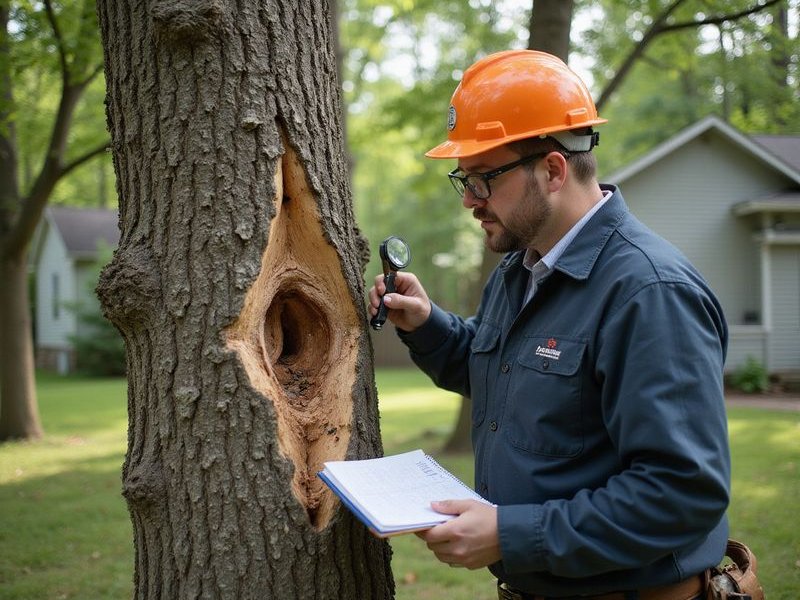
ISA Certified Arborist tree health assessments, disease diagnosis, emerald ash borer treatment, fungal treatment, and preventive care in Duluth, MN.
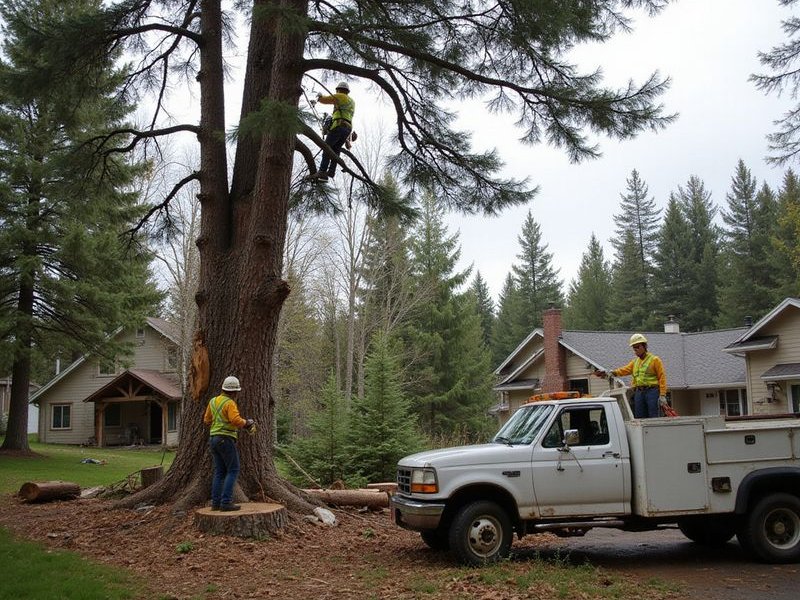
Tree Removal
Safe, professional tree removal for hazardous, dead, or unwanted trees in Duluth and the North Shore.
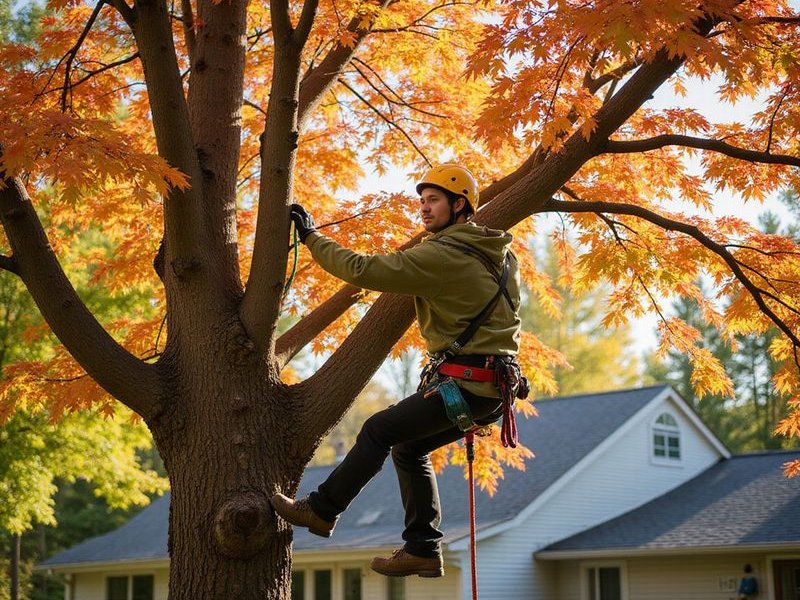
Tree Trimming & Pruning
Expert tree trimming and pruning by an ISA Certified Arborist. Crown thinning, deadwood removal, clearance pruning, and structural pruning in Duluth, MN.
Need Cabling & Bracing?
Call for a free estimate from our ISA Certified Arborist. Same-day assessments in Duluth.