Why Tree Topping Is Harmful and What to Do Instead
Why Tree Topping Is Harmful and What to Do Instead
Every spring, I see the same tragedy unfold in neighborhoods across the country. A homeowner, worried about a large tree near their house, hires a crew to “cut it back.” Within a few hours, what was once a majestic shade tree is reduced to a collection of ugly, blunt stubs. The homeowner believes they have solved a safety problem and saved money. In reality, they have just created a dangerous money pit.
Tree topping—also known as hat-racking, heading, or rounding over—is the indiscriminate cutting of tree branches to stubs or to lateral branches not large enough to assume the terminal role. It is widely considered the most harmful pruning practice known. Every major arboriculture organization, including the International Society of Arboriculture (ISA) and the Tree Care Industry Association (TCIA), classifies it as an unacceptable practice.
Yet, it persists. From our base in Duluth to suburbs across the United States, we see topped trees that are stressed, decaying, and dangerous. Let’s look at why this practice ruins your trees and the specific, standards-based alternatives you should use instead.
What Happens When You Top a Tree
Starvation and Stress
A tree’s leaves are its food factories. Through photosynthesis, they convert sunlight into the sugars and starches that fuel the tree’s daily survival. When you remove 50 to 100 percent of a leafy canopy, you trigger a starvation mechanism. The tree must deplete its deep energy reserves to rapidly produce new foliage just to stay alive. This emergency response puts the tree into a state of severe physiological stress, making it vulnerable to pests and diseases that a healthy tree would easily resist.
Shock and Sunscald
The bark on a tree’s trunk and large branches is accustomed to the shade provided by the canopy. Topping suddenly exposes these sensitive tissues to direct solar radiation. This often leads to sunscald, a condition where the bark tissue dies and cracks open. In northern climates like ours, winter sun reflecting off snow intensifies this damage, while in hotter southern regions, the summer sun cooks the cambium layer. These dead patches become permanent entry points for decay.
Decay and Fungal Infection
Every topping cut creates a massive wound that the tree cannot seal. Proper pruning cuts are made just outside the “branch collar,” allowing the tree to grow specialized tissue over the wound. Topping cuts, however, leave exposed wood stubs that act as a highway for decay fungi.
- Trametes versicolor (Turkey Tail): This common fungus aggressively colonizes exposed sapwood, breaking down the structural lignin.
- Fomes fomentarius (Tinder Fungus): Often seen on birch and beech trees, this fungus causes white rot that destabilizes the trunk. Because the tree cannot “compartmentalize” or wall off these stub wounds, the decay moves vertically down into the main trunk, hollowing it out from the inside.
Weak Regrowth (The Water Sprout Danger)
The regrowth on a topped tree is structurally inferior to the original branches. Normal branches develop deep within the tree’s tissues, overlapping with the trunk’s wood layers for a secure hold like a knot in a rope. The fast-growing shoots that erupt after topping—called water sprouts—are anchored only in the outermost layers of the bark. These sprouts can grow 4 to 6 feet in a single season, but they are weakly attached. As they get heavier, they are highly prone to peeling off during storms. You effectively trade a strong, wind-resistant branch for a cluster of weak, heavy levers waiting to fail. If structural support is the concern, cabling and bracing is a far better alternative than topping.
The Financial and Legal Risks
Beyond the biological damage, topping hits your wallet in three specific ways.
Property Value Destruction
Mature trees are a significant financial asset. Recent data suggests that well-maintained landscape trees can increase property values by 7 to 19 percent. A single mature tree can add between $10,000 and $15,000 to a home’s appraisal value. Topping destroys this value instantly. A disfigured tree is considered a liability rather than an asset, often reducing the sale price of a home.
The “Hidden” Maintenance Costs
Many people top trees to save money on future pruning, but the opposite happens. Because water sprouts grow so aggressively (often 2-3 times faster than normal branches), a topped tree requires annual maintenance to manage the mess. Compare the costs:
- Proper Pruning Cycle: Every 3-5 years.
- Topped Tree Cycle: Every 1-2 years to control sprouts. Eventually, the tree will succumb to decay and require removal. In 2025, the average cost for tree removal in the U.S. ranges from $400 to over $2,000, which is significantly higher than the $315-$700 average for a maintenance prune.
Legal Liability and Negligence
This is the risk most homeowners overlook. If a tree on your property injures someone or damages a neighbor’s home, you can be held liable. Courts have found property owners negligent for allowing “known hazardous conditions” to persist. Topping violates the ANSI A300 industry standards for pruning. By hiring someone to top your tree, you may be creating a documented record of negligence that could void insurance protections or lead to a lawsuit if that tree fails.
Smart Alternatives to Topping
You can reduce a tree’s size or improve safety without ruining it. We follow the ANSI A300 standards, which mandate specific techniques for size management.
Crown Reduction vs. Topping
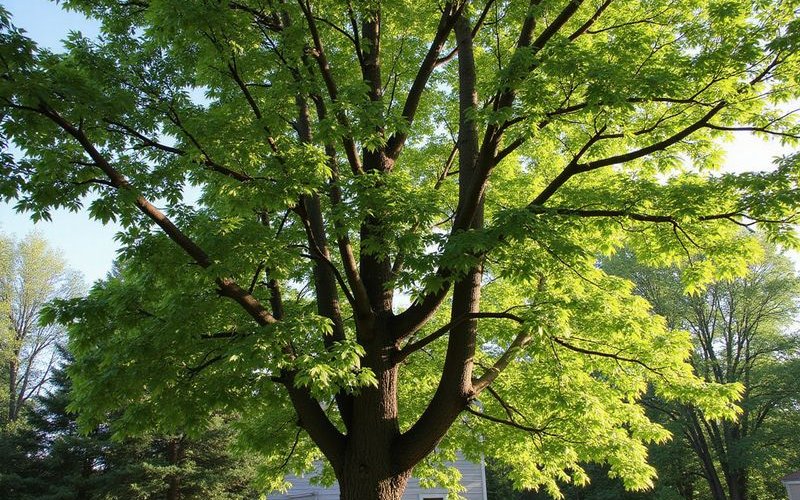
If a tree is too large, we use Crown Reduction. This method reduces height or spread by cutting limbs back to a lateral branch that is at least one-third the diameter of the limb being removed. This “1/3 rule” ensures the remaining branch is large enough to sustain the limb, preventing starvation and excessive sprouting.
| Feature | Tree Topping | Crown Reduction |
|---|---|---|
| Technique | Cuts branches to stubs indiscriminately. | Cuts limbs back to a substantial lateral branch. |
| Regrowth | Rapid, weak water sprouts. | Controlled, natural growth. |
| Health Impact | Causes decay, sunscald, and starvation. | Maintains tree structure and health. |
| Timeframe | Temporary fix (ruins tree in long run). | Long-term solution. |
Crown Thinning
When homeowners worry about wind resistance, they often ask for topping. A better solution is Crown Thinning, which selectively removes branches throughout the canopy to increase air movement. This reduces the “sail effect” during storms, allowing wind to pass through the tree rather than pushing against it. For detailed differences, read our guide on crown thinning vs crown raising.
Crown Raising
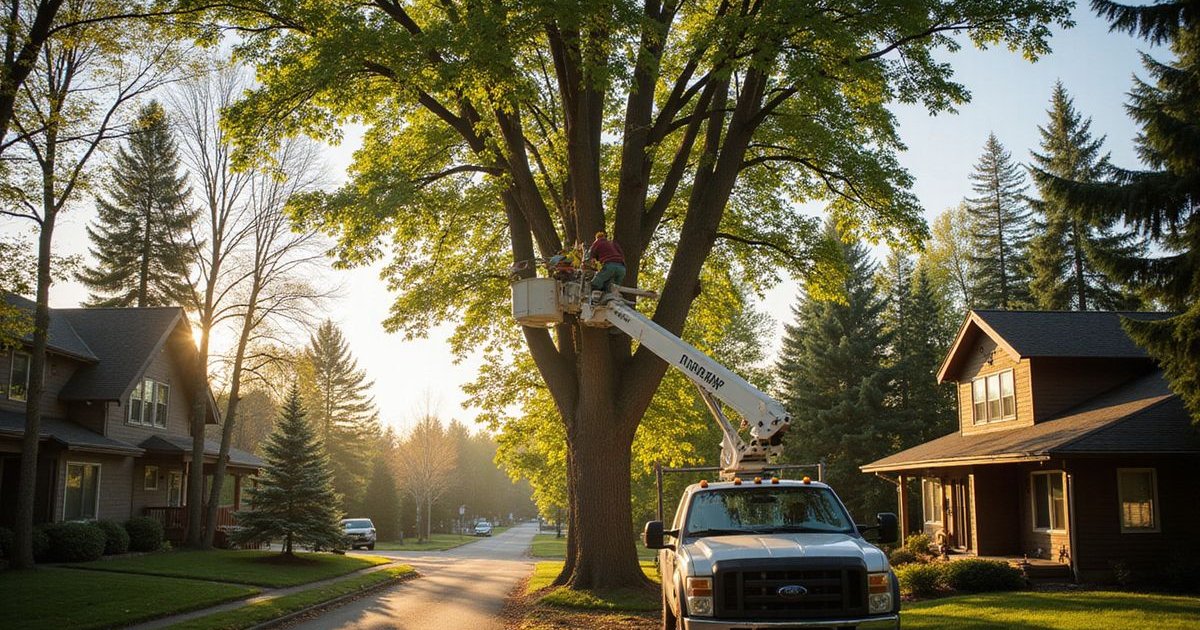
If low branches are interfering with your driveway, roof, or view, Crown Raising is the answer. We remove only the lower branches to provide vertical clearance while leaving the upper canopy intact. This is one of the most common trimming and pruning services we perform, especially for street trees and those near walkways.
How to Spot (and Avoid) a “Topper”
Professional arborists will never recommend topping. Unfortunately, many uncertified operators still offer it. Here is how to protect your trees from bad actors.
Watch for Climbing Spikes. Legitimate arborists never use climbing spikes (spurs) to prune a living tree. Spikes puncture the cambium layer, creating hundreds of wounds that invite insects and disease. If you see a crew member putting on spikes to “trim” your tree, stop them immediately. Spikes are acceptable only during a total tree removal.
Check the Language. Review the written quote carefully. If the proposal uses terms like “topping,” “rounding over,” “tipping,” or “lowering,” it is a red flag. A professional proposal will use terms like “crown reduction,” “thinning,” or “deadwood removal” and will reference specific goals.
Verify Credentials and Insurance. Ask for an ISA Certified Arborist credential. This certification ensures the individual has passed a comprehensive exam on tree biology and pruning standards. Always verify their General Liability and Workers’ Compensation insurance directly with the carrier.
Can a Topped Tree Be Saved?
If you have a tree that was topped in the past, hope is not entirely lost. Restoration Pruning is a long-term process where we selectively thin out the water sprouts. We identify the strongest, best-positioned sprouts to become the new “leaders” and remove the weaker, interfering ones over several years. This trains the tree to rebuild a more natural structure. However, if the internal decay from the original topping cuts is too advanced, tree removal may be the only safe option.
Investing in Your Canopy
Your trees are a long-term investment that pays dividends in shade, beauty, and property value. Topping is a short-sighted mistake that turns that asset into a liability. As an ISA Certified Arborist team, we are committed to preserving the urban canopy using science-based practices. If you are concerned about a tree’s size or safety, let’s look at the options together. There is almost always a way to achieve your goals without harming the tree. Contact us today for an assessment that puts the health of your property first. The right pruning approach solves the problem for good, not just for a season.
Need Professional Tree Service?
Call our ISA Certified Arborist for a free estimate. Serving Duluth, MN and the North Shore.
Call (218) 555-0391