Can You Remove a Tree Yourself? DIY vs Hiring a Pro in Duluth
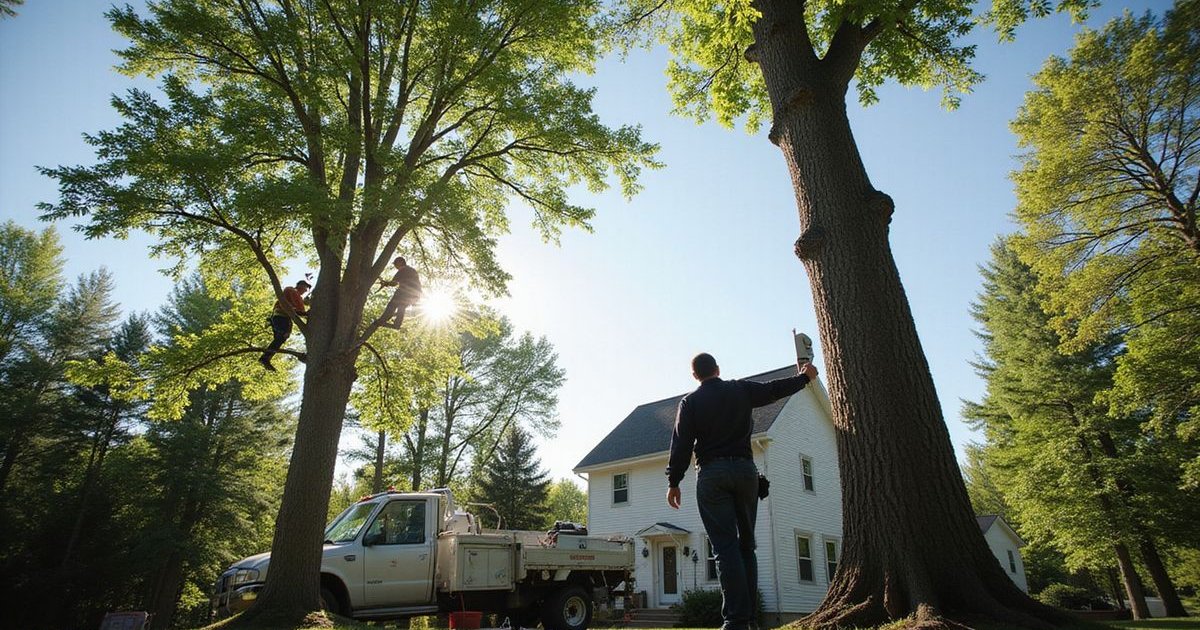
You know how the spring thaw in Duluth always reveals the damage winter left behind?
Every year, homeowners survey their yards and spot trees that look ready to come down.
Maybe a Paper Birch didn’t survive the freeze, or a heavy snow load snapped the top off an old Spruce.
The first instinct is often to grab a chainsaw and handle it yourself to save money.
Professional tree removal can cost anywhere from several hundred to a few thousand dollars, so the desire to DIY is understandable.
But there is a distinct line between a manageable Saturday project and a dangerous liability.
We have seen plenty of “money-saving” attempts turn into insurance claims.
This guide breaks down exactly where that line is, using local data and safety standards to help you decide.
When DIY Tree Removal Might Be Reasonable
There is a narrow window where a homeowner with the right gear can safely remove a tree.
If you meet specific size and location criteria, you might be able to handle the job without calling us.
The “Safe Zone” Criteria:
- Height Limit: The tree is strictly under 15 feet tall.
- Diameter: The trunk is less than 6 inches in diameter (about the size of a standard paint can).
- Clearance: There is a 360-degree clear drop zone.
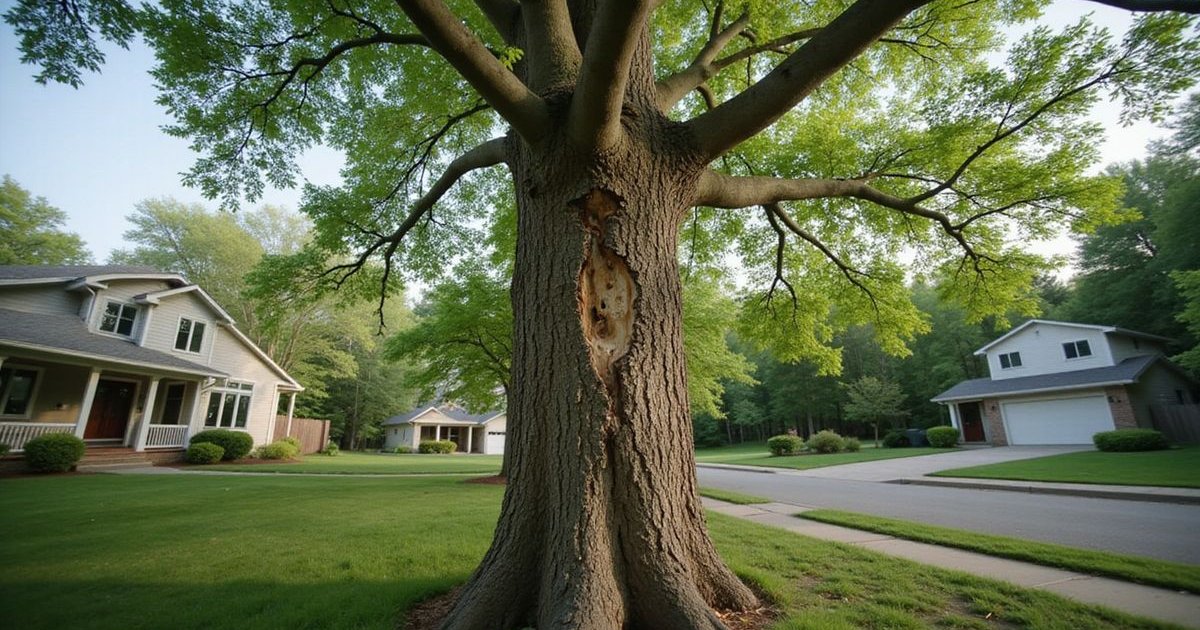
- Condition: The wood is not rotting, hollow, or split.
Small trees in open spaces are the primary candidates here.
A young Maple or Poplar in the middle of a flat backyard, far from your garage or the neighbor’s fence, is generally safe.
The physics of felling a tree change drastically once you exceed these dimensions.
Green wood is deceptively heavy.
A single cubic foot of freshly cut Red Oak can weigh over 60 pounds.
Even a small 15-foot tree can generate enough force to break a bone or crush a fence if it falls unpredictably.
Dead saplings and small ornamentals often seem easier because they are lighter.
However, dead wood presents a specific hazard known as “brittle failure.”
Dry, dead branches can snap off the trunk solely from the vibration of the chainsaw, falling on the operator before the tree actually drops.
The Gear You Actually Need
If you decide to proceed, do not rely on a rusty saw you found in the shed.
Safe operation requires specific protective equipment.
- Chainsaw: A well-maintained saw with a sharp chain (dull chains cause kickback).
- PPE: Kevlar chainsaw chaps, a hard hat with a face shield, and steel-toed boots.
- Wedges: Plastic felling wedges to prevent the saw from getting pinched.
- Spotter: A second person standing 20 feet away to watch for hazards you cannot see.
When You Should Absolutely Hire a Professional
Most tree removal scenarios in Duluth exceed the safety limits for DIY work.
The Bureau of Labor Statistics consistently ranks logging and tree work among the most dangerous civilian occupations in the U.S.
Here are the specific scenarios where professional intervention is required.
Trees Near Structures
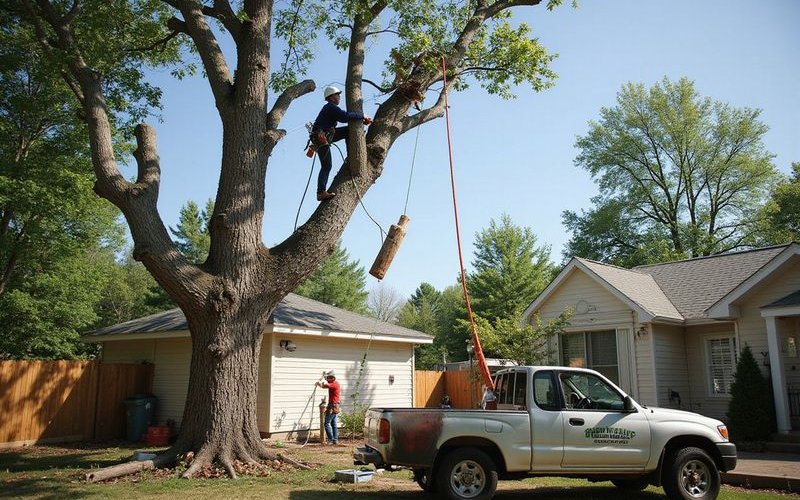
If a tree is within striking distance of a building, do not cut it yourself.
Professional arborists use a technique called “negative rigging.”
We secure each branch and trunk section with ropes and pulleys, lowering them slowly to the ground rather than letting them fall.
This control is vital in Duluth neighborhoods like East Hillside or Chester Park.
Homes in these areas are often built on narrow lots where the distance between houses is less than the height of the trees shading them.
Repairing a crushed roof truss or a smashed garage door will cost significantly more than a standard removal fee.
Trees Near Power Lines
This situation allows for zero margin of error.
Electricity can arc from a power line to a nearby object without direct contact.
If a tree branch, your saw, or even your body gets within the “minimum approach distance” of a high-voltage line, the result can be fatal.
Who handles what?
- Service Drop (Pole to House): Usually the homeowner’s responsibility, but requires a disconnect by the utility first.
- Main Lines (Pole to Pole): Contact Minnesota Power. They manage vegetation in the right-of-way.
Only line-clearance certified arborists are legally and safely permitted to work within 10 feet of energized conductors.
Large Trees Over 20 Feet
The weight of a tree increases exponentially with height and diameter.
A mature White Pine, common in our region, can weigh several tons.
When that much mass hits the ground, the kinetic energy causes the trunk to bounce, roll, or shatter.
Professionals use complex cutting techniques—like the Humboldt notch or the Open Face notch—to direct this energy.
Without this training, a large tree can split vertically called a “barber chair,” which kicks the trunk backward instantly and with lethal force.
The Duluth Factor: Slopes and Clay
Our local geography adds a layer of difficulty you don’t find in flatter cities.
Many properties in Duluth sit on steep grades with heavy red clay soil.
Clay becomes incredibly slick when wet, making footing treacherous while operating a running chainsaw.
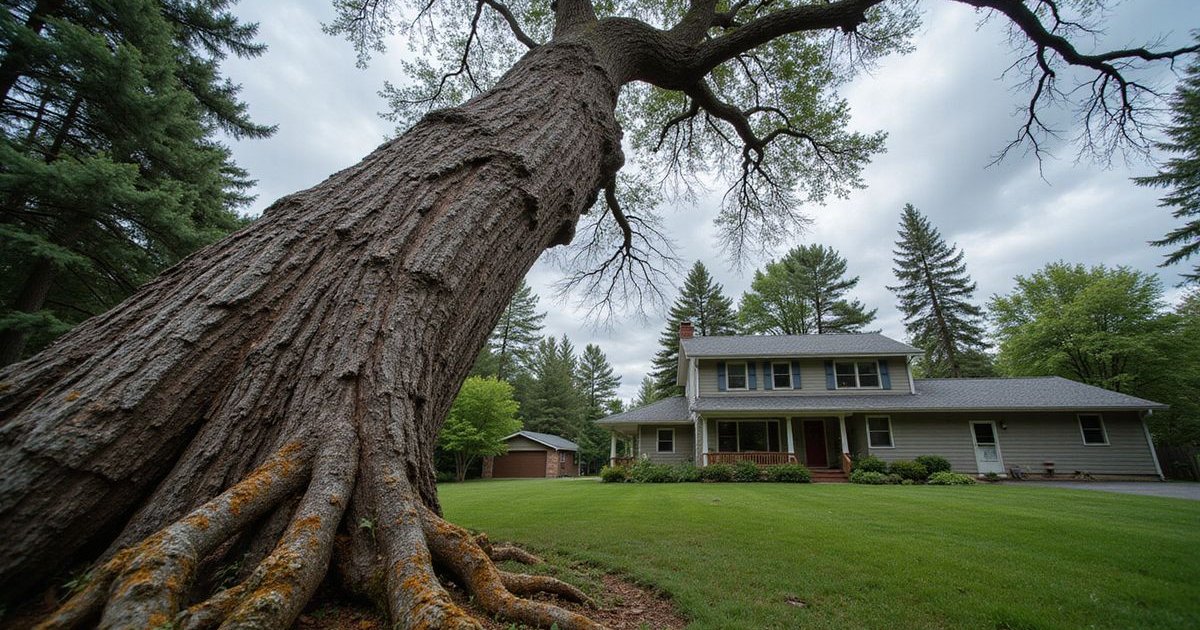
Furthermore, trees on slopes almost always have a natural lean downhill.
Trying to fell a tree uphill or across the slope against its natural lean requires heavy-duty winching equipment or a crane.
Storm-Damaged Trees
Storm damage creates “stored energy” in the wood.
A tree that has been partially uprooted or snapped by wind is under immense mechanical tension.
Cutting a branch that is under pressure can cause it to snap back like a giant rubber band.
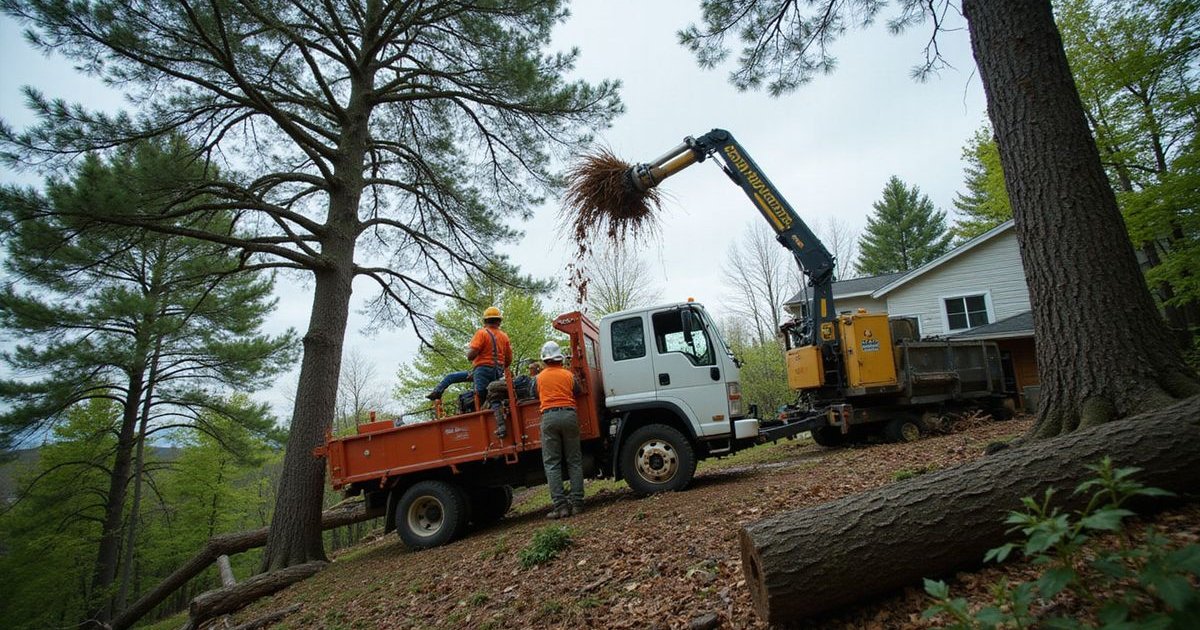
Our emergency storm damage service team uses grapple trucks and remote cutting tools to dismantle these hazards without putting a person directly in the line of fire.
The Hidden Costs of DIY Tree Removal
Homeowners often look at the price of a professional quote and compare it to $0 for doing it themselves.
This calculation ignores the immediate cash outlays required to do the job safely.
We have broken down the real costs of a DIY attempt versus a professional service in the table below.
Comparative Cost Analysis
| Expense Category | DIY Cost (Estimated) | Professional Service |
|---|---|---|
| Equipment Rental | $100 - $250 (Saw, safety gear, trailer) | Included |
| Safety Gear | $150+ (Chaps, helmet, eye protection) | Included |
| Disposal Fees | $20 - $100 (WLSSD fees + fuel) | Included |
| Time Investment | 8 - 16 Hours (Labor + Hauling) | 0 Hours |
| Risk/Liability | 100% on Homeowner | Covered by Company Insurance |
| Total Estimated | $270 - $500+ (plus risk) | Varies by tree size |
Equipment and Disposal Realities
Renting a proper chainsaw in Duluth typically costs between $75 and $100 per day.
You will also need to manage the debris.
The Western Lake Superior Sanitary District (WLSSD) yard waste site on Courtland Street is a great resource, but it requires time and effort to utilize.
You have to limb the tree, cut it into manageable lengths, load it into a truck or trailer, and make multiple trips to the compost site.
Contractors pay for disposal, but homeowners still pay with their time and vehicle wear-and-tear.
Liability and Insurance
This is the most significant financial risk.
If you drop a tree on your neighbor’s fence, you are liable for the repairs.
Your homeowner’s insurance might cover it, but you will still pay your deductible, and your premiums will likely rise.
Professional services carry General Liability and Workers’ Compensation insurance.
If a pro damages your property, their insurance pays for the repairs.
If a pro gets hurt on your property, their Workers’ Comp covers their medical bills.
If you get hurt doing it yourself, the medical costs fall entirely on you.
Legal Considerations in Duluth
You cannot cut down every tree just because it is on your property.
The City of Duluth has specific ordinances regarding tree preservation and removal, particularly concerning the “public right-of-way.”
Key Regulations to Know:
- Boulevard Trees: The strip of land between the sidewalk and the curb is city property. You cannot remove, trim, or plant trees here without permission from the City Forester.
- Landmark Trees: Certain developments or areas with Homeowner Associations (HOAs) may have covenants protecting mature trees.
- Invasive Species: There are strict guidelines on handling Ash trees due to the Emerald Ash Borer quarantine. Moving Ash wood outside of regulated zones can result in state fines.
Failing to secure the proper permission can result in fines and a requirement to pay for the replacement value of the tree, which is calculated by trunk inch and can be thousands of dollars.
Our guide to Duluth tree removal permits and regulations provides a deeper dive into the specific forms and contacts you need.
A Practical Decision Framework
Making the right choice comes down to an honest assessment of the situation.
Use this checklist to determine if you can proceed or if you need to pick up the phone.
Proceed with DIY ONLY if:
- The tree is under 15 feet tall and 6 inches in diameter.
- You are wearing full PPE (chaps, helmet, boots).
- The tree is 50+ feet away from any house, garage, or power line.
- You have a helper with a cell phone standing clear of the drop zone.
- The ground is flat, stable, and not slippery.
- You are confident in your ability to use a chainsaw.
Call a Professional IMMEDIATELY if:
- The tree is leaning toward a structure.
- Any part of the tree is within 10 feet of a power line.
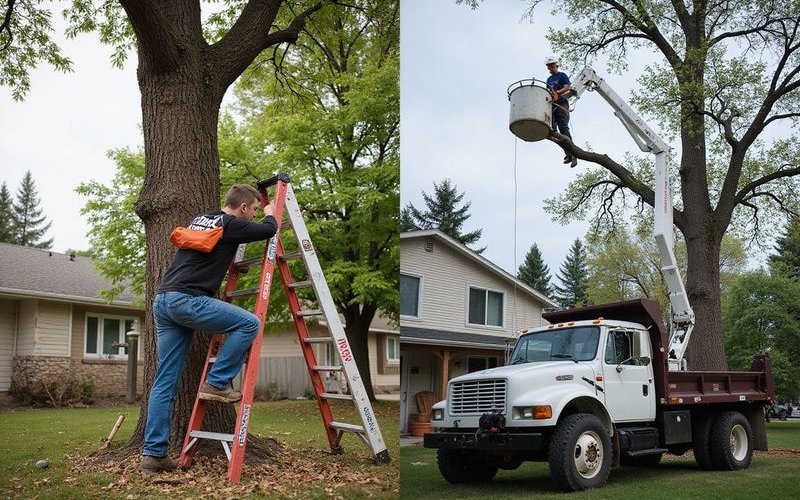
- You need a ladder to reach the limbs (ladders and chainsaws are a dangerous mix).
- The tree is hollow, rotting, or storm-damaged.
- You are located on a steep hill or in a dense neighborhood.
The Bottom Line
There is no shame in acknowledging a job is too big for you.
Tree removal involves heights, heavy weights, and dangerous tools.
In a city like Duluth, where the terrain is steep and the weather is unpredictable, the risks are amplified.
The cost of professional tree removal buys you more than just a clear yard.
It buys you the assurance that the tree will come down safely without crushing your garage or sending you to the emergency room.
At Northshore Tree Service, we provide free estimates throughout the Duluth area.
We will come out, look at your specific tree, and give you an honest recommendation.
If it’s a small job you can handle safely, we will tell you.
But if it requires rigging, cranes, and expertise, our team is ready to get the work done right.
Need Professional Tree Service?
Call our ISA Certified Arborist for a free estimate. Serving Duluth, MN and the North Shore.
Call (218) 555-0391