Oak Wilt in Minnesota: Prevention, Identification & Treatment
Oak wilt is one of the most destructive tree diseases in Minnesota, and it poses a serious threat to the oak trees that make up a significant portion of our state’s hardwood forests. While the disease has historically been more prevalent in central and southern Minnesota, recent confirmation of oak wilt in Carlton County in 2024 shows it is moving steadily northward. Homeowners throughout the Duluth area and North Shore now need to understand how to protect their oaks before infection centers become established here.
As an ISA Certified Arborist, I have seen too many beautiful, century-old oaks lost because the warning signs were missed until it was too late. This guide covers everything Duluth-area homeowners need to know about identification, prevention, and management of oak wilt.
What Is Oak Wilt?
Oak wilt is caused by the fungal pathogen Bretziella fagacearum (formerly Ceratocystis fagacearum). This invasive fungus infects oak trees and blocks the water-conducting vessels in the sapwood, effectively shutting down the tree’s ability to transport water from roots to leaves. The result is rapid wilting and, in many cases, death.
The disease affects all oak species but with dramatically different outcomes depending on the oak group.
Red oak group (red oak, pin oak, northern red oak) is extremely susceptible. Trees in this group typically die within 4 to 6 weeks of showing symptoms, sometimes even faster. A red oak that looks perfectly healthy in early June can be completely dead by mid-July. The speed of mortality makes red oaks the primary concern in oak wilt management.
White oak group (white oak, bur oak, swamp white oak) is more resistant. Trees in this group can survive infection for years, often compartmentalizing the fungus and showing gradual branch-by-branch decline rather than sudden death. Bur oaks, which are common in western Duluth and the surrounding communities, can sometimes wall off the infection and survive, though they may lose significant canopy over time.
How Oak Wilt Spreads
Understanding the two primary transmission pathways is essential for prevention.
Overland Spread (Beetle Transmission)
The primary way oak wilt spreads to new areas is through sap-feeding beetles, primarily from the Nitidulidae family. Two specific species, Colopterus truncatus and Carpophilus sayi, are the main culprits in Minnesota. These small beetles are attracted to the “fruity” smell of fungal mats that develop beneath the bark of recently killed red oaks. They pick up fungal spores while feeding on these mats and then carry them to fresh wounds on healthy oak trees.
This biology makes the timing of pruning and any activity that wounds oak trees critical. Sap beetles are most active from April through July, precisely when they pose the greatest risk of transmitting oak wilt spores to fresh wounds.
Fresh wounds include not just pruning cuts but also storm damage, construction damage, and even lawn mower strikes against surface roots. Any break in the bark that exposes sapwood during the high-risk period can serve as an entry point for the fungus.
Underground Spread (Root Grafts)
The second transmission pathway is through interconnected root systems. Oaks of the same species growing within approximately 50 to 60 feet of each other frequently develop root grafts, physical connections between their root systems. Once one tree is infected, the fungus can spread through these shared root connections to every grafted tree in the network.
Data shows that over 90% of new oak wilt infections in established woodlands occur through these root grafts.
Underground spread is particularly problematic in neighborhoods and wooded lots where oaks have grown in proximity for decades. A single infected tree can transmit the disease to every connected oak, creating expanding pockets of dead trees that grow outward year after year.
Identifying Oak Wilt
Distinguishing oak wilt from other common issues is key to saving your trees. Many homeowners confuse it with less severe fungal issues like Anthracnose.
Symptom Comparison Table
| Feature | Oak Wilt | Anthracnose | Bur Oak Blight |
|---|---|---|---|
| Primary Symptom | Rapid wilting from top down; leaf drop while green | Brown/tan spots on leaves; distorted/curled leaves | Wedge-shaped brown lesions on leaves |
| Timing | Mid-May through September | Cool, wet springs (May/June) | Late summer (July/August) |
| Progression | Kills Red Oaks in weeks | Cosmetic damage; rarely kills the tree | Slow decline over many years |
| Leaf Appearance | Distinct line between bronze/brown and green tissue | Irregular dead spots mainly along veins | Purple-brown veins on underside of leaf |
Red Oak Symptoms
Red oak symptoms are dramatic and fast-moving.
Rapid leaf wilting and browning. Leaves wilt from the outer edges inward and from the top of the crown downward. The browning pattern typically shows a distinct margin between the dead brown tissue and the still-green interior of the leaf.
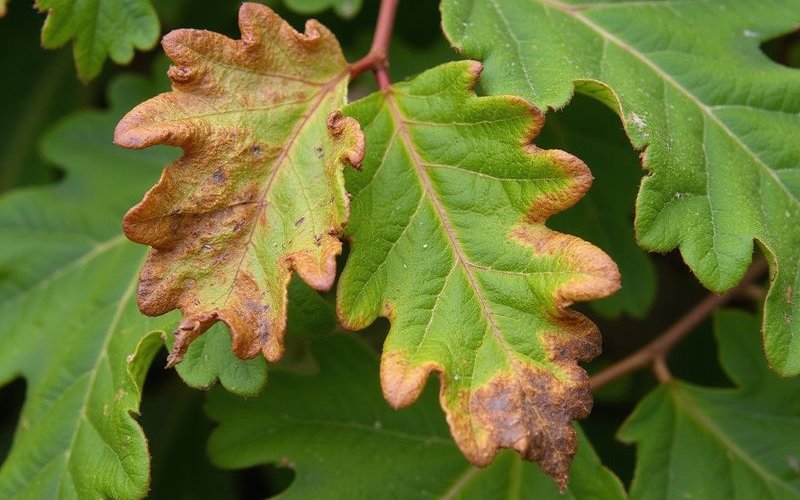
Premature leaf drop. Infected red oaks drop their leaves while still partially green, creating a carpet of wilted, discolored leaves at the base of the tree during the middle of summer. This mid-summer leaf drop in an oak is highly suspicious for oak wilt.
Crown progression. Symptoms typically begin in the upper crown and move rapidly downward. Some trees wilt from one side first, creating an asymmetric appearance.
Full tree mortality. A red oak can go from initial symptoms to complete death in as little as 3 to 6 weeks during the growing season. The speed differentiates oak wilt from other causes of leaf browning like drought stress or anthracnose.
White Oak Symptoms
White oak symptoms are slower and less dramatic.
Gradual branch dieback. Individual branches die over the course of one or more growing seasons. The overall canopy thins progressively.
Scattered leaf symptoms. Leaves on affected branches show wilting and browning similar to red oaks but limited to individual branches rather than the entire crown.
Chronic decline. White oaks may persist with oak wilt for several years, slowly declining with each growing season. Some bur oaks can live with the disease for a decade or more.
Prevention Is the Best Strategy
Because oak wilt is extremely difficult to cure once established, prevention is far more effective than treatment. Here are the most important preventive measures for homeowners in our area.
Observe the Pruning Moratorium
The single most important thing you can do to prevent oak wilt is to never prune or wound oak trees during the high-risk period from April 1 through July 15 in Minnesota. This is not a casual guideline. It is a critical disease prevention practice supported by decades of research and recommended by the Minnesota Department of Natural Resources.
If your oaks need trimming or pruning, schedule the work for the dormant season, November through February, when sap beetles are inactive and the risk of disease transmission is essentially zero. While October and March are generally considered lower risk, an unseasonably warm spring can wake beetles up early, so winter is always the safest bet.
Treat All Oak Wounds Immediately
If an oak tree sustains a wound during the growing season, whether from storm damage, vehicle impact, or any other cause, treat the wound immediately. This is one of the few situations where wound dressing is recommended in modern arboriculture.
You must apply the sealant within 15 minutes of the injury.
Research indicates that beetles can locate fresh sap wounds in less than an hour. Carrying a small can of wound paint or shellac in your vehicle during spring and summer is a smart precaution. Water-based latex paint works well; you do not need expensive specialty products, just a physical barrier to mask the scent.
Avoid Damaging Oaks During High-Risk Season
Communicate with contractors, landscapers, and utility workers about the importance of avoiding damage to oak trees during the April through July period. Construction projects, trenching, and heavy equipment operation near oaks should be scheduled for the low-risk season whenever possible.
In Duluth, where tree removal and construction often occur on steep terrain near established oak stands, this coordination is especially important. Heavy equipment tracking over root zones can create subsurface wounds that are invisible but equally dangerous.
Managing Existing Oak Wilt Infections
If oak wilt is confirmed on your property or in your neighborhood, several management strategies can help contain the spread and protect uninfected trees.
Root Barrier Trenching
To stop underground spread through root grafts, a barrier trench must be installed to physically sever root connections between infected and healthy trees. This trench is cut using a vibratory plow or trenching machine at a distance of at least 100 feet beyond the last symptomatic tree in the infection pocket.
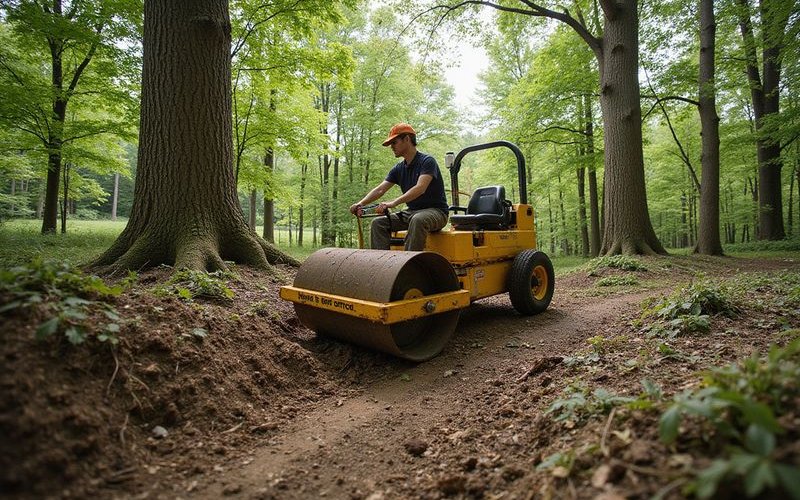
The trench must be at least 5 feet deep to be effective.
Shallow trenches often fail because oak roots can grow deep in sandy or loamy soils. Root barrier trenching is the most effective method for containing oak wilt pockets and is a standard practice recommended by the Minnesota DNR.
Proactive Injection Treatment
Healthy high-value oaks within the potential infection zone can be treated with the fungicide propiconazole (often sold as Alamo) via trunk injection. This treatment provides approximately two years of systemic protection against oak wilt infection. It is most effective as a preventive measure for trees not yet infected but at risk due to proximity to known infection.
Expect costs to range between $6 and $10 per diameter inch.
Propiconazole injection is a professional-only treatment that requires specialized equipment and expertise. It should be viewed as a bridge strategy that buys time while root barriers are installed and infected trees are removed, not as a permanent standalone solution.
Remove and Dispose of Infected Red Oaks
Infected red oaks that die quickly can produce the fungal mats that attract sap beetles and perpetuate overland spread. These trees should be removed promptly and the wood disposed of properly. Options include debarking, chipping, burying under plastic, or kiln-drying the lumber. Simply cutting an infected oak and leaving the logs on site allows the fungal mats to develop under the bark and continues the disease cycle.
If you chip the wood, ensure chips are no larger than 1 inch in size.
Firewood from oak wilt-killed trees should never be transported to new locations. Moving infected firewood is one of the primary ways oak wilt has spread across Minnesota. If you use oak firewood, source it locally and burn it at the site where it was cut.
Oak Wilt and Your Duluth Property
While oak wilt infection centers have been more commonly reported in central and southern Minnesota, vigilance in the Duluth area is warranted. Northern red oak and bur oak are both present in our urban forest and natural areas. As the disease continues to spread and as infected firewood transportation remains a concern, new infection centers can appear anywhere.
Duluth homeowners with oaks should establish a relationship with a certified arborist for periodic tree health assessments. Early detection of oak wilt dramatically improves the chances of containing the disease and protecting nearby trees. Visit our tree health and disease treatment service page for more information about our assessment and treatment programs.
For a broader understanding of tree diseases affecting our area, check out our guide on common tree diseases in Duluth.
Key Takeaways
Oak wilt is a lethal disease that demands respect and proactive management. The most important steps you can take are:
- Never prune oaks from April 1 through July 15 in Minnesota
- Treat any oak wounds immediately (within 15 minutes) during the growing season
- Do not transport oak firewood from unknown sources
- Watch for symptoms and report suspected oak wilt to the Minnesota DNR
- Consult a certified arborist if you suspect oak wilt on or near your property
Northshore Tree Service provides oak wilt assessment, prevention consultation, and management services throughout Duluth, Hermantown, Proctor, and North Shore communities. As ISA Certified Arborists, we follow the latest DNR guidelines and research-based practices for oak wilt management. Contact us if you have concerns about your oak trees.
Need Professional Tree Service?
Call our ISA Certified Arborist for a free estimate. Serving Duluth, MN and the North Shore.
Call (218) 555-0391