Emerald Ash Borer in Duluth: What Every Homeowner Should Know
The emerald ash borer is no longer just a distant warning for us in northeastern Minnesota; it is an established reality in Duluth’s urban forest. As an ISA Certified Arborist team working in the field every day, we see the impact firsthand, from the hillside neighborhoods of Congdon Park to the streets of West Duluth. This invasive beetle represents the most significant shift in our local tree health landscape since Dutch elm disease.
If you have ash trees on your property, the time for “wait and see” has passed. This guide will help you understand the current situation in St. Louis County, recognize the subtle signs of infestation we look for during inspections, and make financial decisions that make sense for your home and budget.
What Is the Emerald Ash Borer?
The emerald ash borer (Agrilus planipennis), or EAB, is a metallic green beetle native to Asia that has become the most destructive forest insect in North American history. It was first detected near Detroit in 2002 and has since killed hundreds of millions of ash trees.
Adult beetles are small, roughly half an inch long, and metallic green. While adults nibble on leaves causing minor cosmetic issues, the larvae are the true killers. Female beetles lay eggs in bark crevices, and the hatching larvae bore into the tree. They feed on the inner bark (phloem) and cambium layer, which are the pipelines that transport water and nutrients.
This feeding creates serpentine galleries that effectively strangle the tree from the inside. An infested ash tree typically dies within 3 to 5 years of the initial attack, often shattering and becoming hazardous much faster than trees that die from other causes.
EAB in Duluth and Northern Minnesota
EAB was first confirmed in Minnesota in 2009, but its presence in Duluth has now moved from “early detection” to active management. Southeast St. Louis County is under a formal quarantine, meaning there are strict legal limits on moving ash wood to prevent further spread.
This is a critical issue for our city because ash trees make up a massive portion of our canopy. Neighborhoods like Lakeside, Woodland, and Lincoln Park are lined with green and black ash trees, many planted decades ago to replace elms.
Current Status in 2026:
- Established Populations: EAB is actively reproducing in our area.
- Quarantine Rules: You cannot move ash wood out of the quarantined zone (which includes Duluth).
- City Management: The City of Duluth has a management plan in place, treating high-value public trees while removing declining ones to reduce public safety risks.
For homeowners, the question is not if your untreated ash tree will be exposed, but how you will manage it when it is.
How to Identify Ash Trees on Your Property
You cannot assess your risk until you know exactly what is growing in your yard. Many homeowners confuse ash trees with Boxelder or Walnut trees, which can look similar to the untrained eye.
Look for these specific features:
- Opposite Branching: This is your best winter identifier. branches emerge in pairs directly across from each other, like arms on a torso. Most other trees in our area (oaks, elms, maples) have alternate branching.
- Diamond-Patterned Bark: On mature trees, the bark forms tight, interlocking ridges that look like a diamond pattern.
- Compound Leaves: Each leaf stem has 5 to 9 leaflets arranged opposite each other, with one single leaflet at the tip.
- Paddle-Shaped Seeds: Ash seeds, or samaras, hang in clusters and look like dry, single-winged paddles.
If you are unsure, we recommend getting a professional identification. We have seen homeowners pay to treat a Boxelder tree by mistake, or conversely, cut down a healthy ash they thought was already dead.
Signs of EAB Infestation
Early detection is difficult because the damage happens under the bark. By the time a tree looks “sick” to the average observer, it may be too late to save. We look for these specific indicators during our property assessments.
Early Signs to Watch For
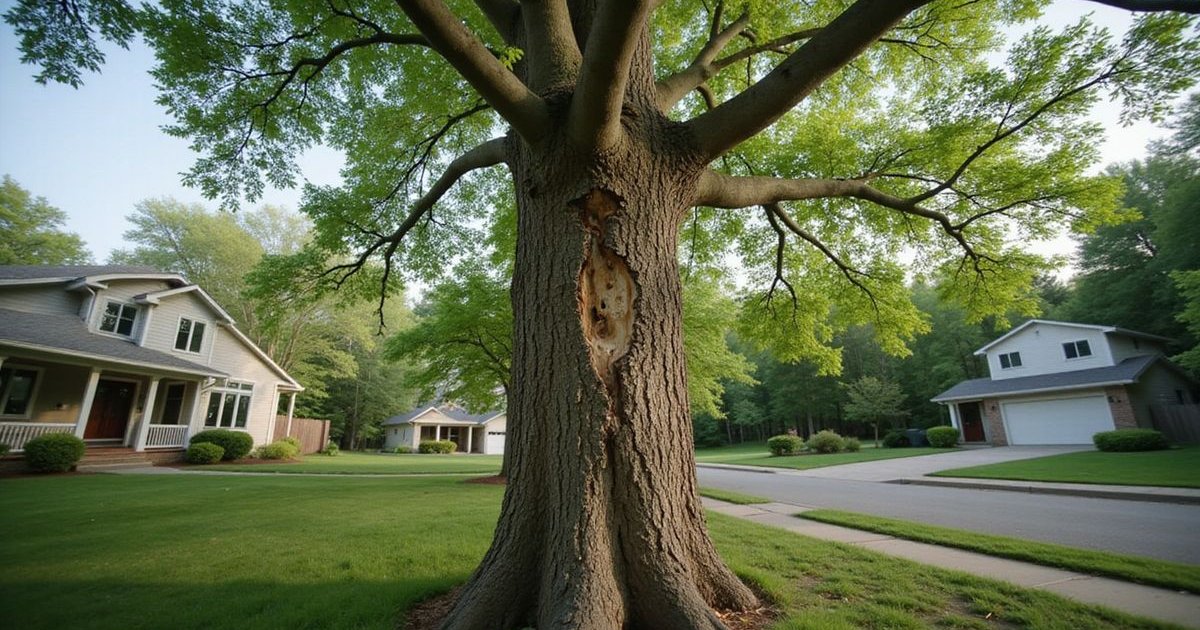
“Blonding” on the Bark. This is often the very first sign we see in Duluth. Woodpeckers are excellent at finding EAB larvae. As they forage, they flake off the outer gray bark, revealing the lighter, blond inner bark. If you see patches of light bark on the trunk or main branches, it is a strong indicator of infestation.
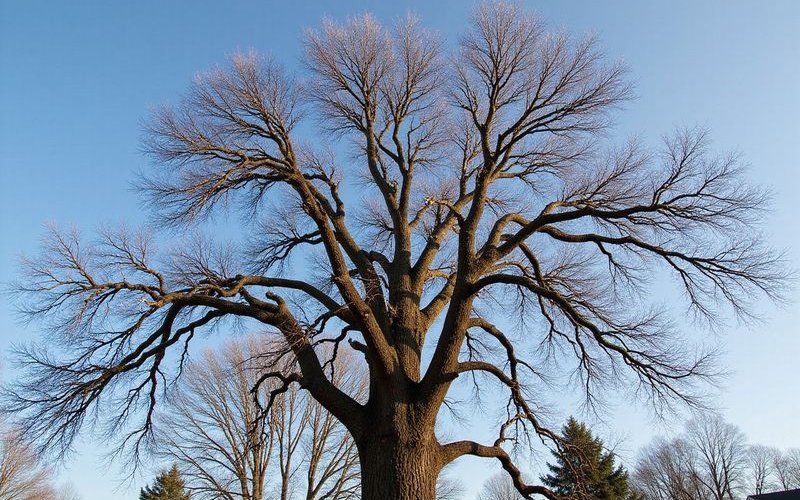
Canopy Thinning. Look at the very top of the tree. An infested tree will start to lose density in the upper third of the canopy first. You might see more sky through the leaves than in previous years.
Epicormic Sprouting. This is a stress response. The tree tries to grow new leaves from the trunk or the base (suckers) because the upper canopy is being starved of nutrients.
Definitive Signs
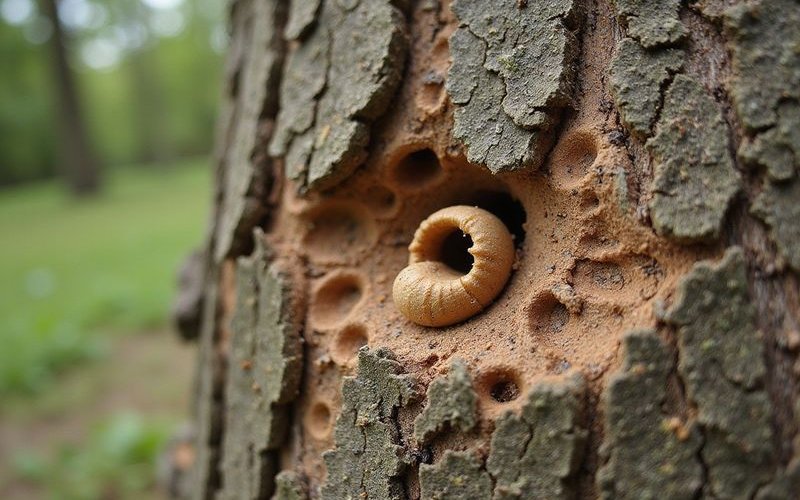
S-Shaped Galleries. If you peel back a piece of loose bark near a woodpecker hole, you may see winding, serpentine tunnels packed with sawdust. These are the feeding tracks of the larvae and are the “smoking gun” of EAB.
D-Shaped Exit Holes. When the adult beetle emerges, it chews a hole that is distinctly shaped like a capital “D” on its side. These are small, only about 1/8 inch wide.
Late-Stage Symptoms
Vertical Bark Splits. As the tree dies and dries out, the bark may split vertically, exposing the gallery tracks underneath.
Severe Dieback. Once a tree has lost 30% to 50% of its canopy, the vascular damage is usually too severe for the tree to recover, even with treatment.
Treatment Options
There is good news: EAB treatment is highly effective if started early. You do not have to lose your tree. The decision usually comes down to the value of the tree versus the cost of long-term care.
Professional Trunk Injection
This is the gold standard for EAB management in high-pressure areas like Duluth. We inject a systemic insecticide (Emamectin benzoate) directly into the base of the tree. The tree’s vascular system transports the product up to the canopy, killing larvae that try to feed.
- Effectiveness: Near 99% effective when applied correctly.
- Duration: One treatment protects the tree for two years.
- Best Timing in Duluth: Because our spring is late, the ideal window for injection is June through August. The tree must have green leaves to uptake the product.
Soil Drench (Homeowner Option)
You can buy products containing Imidacloprid at garden centers to pour around the base of the tree.
- Limitations: This method is generally not effective for trees larger than 15 inches in diameter (about the size of a pizza pan). It also must be applied annually and can be less consistent than injections.
- Warning: Flowering plants near the base of the tree can absorb the product, potentially harming pollinators.
The Cost Comparison: Treatment vs. Removal
Many homeowners assume removal is the cheaper “one-and-done” solution, but the data often shows otherwise. Here is a typical cost breakdown for a mature ash tree in our region.
| Factor | Biannual Treatment (Injection) | Removal & Replacement |
|---|---|---|
| Immediate Cost | $150 - $300 (every 2 years) | $800 - $2,500+ (one time) |
| 10-Year Cost | $750 - $1,500 | $1,200 - $3,000+ (includes new tree) |
| Tree Benefits | Retain mature shade immediately | Wait 20+ years for shade |
| Property Value | Maintains value | Immediate loss of curb appeal |
Our Advice: If the tree is healthy, structurally sound, and provides shade to your home or patio, treatment is almost always the better financial decision.
When Removal Is Necessary
If a tree has lost more than 30% of its canopy or has structural defects like a large crack or rot, treatment is rarely successful. In these cases, tree removal is the only responsible option.
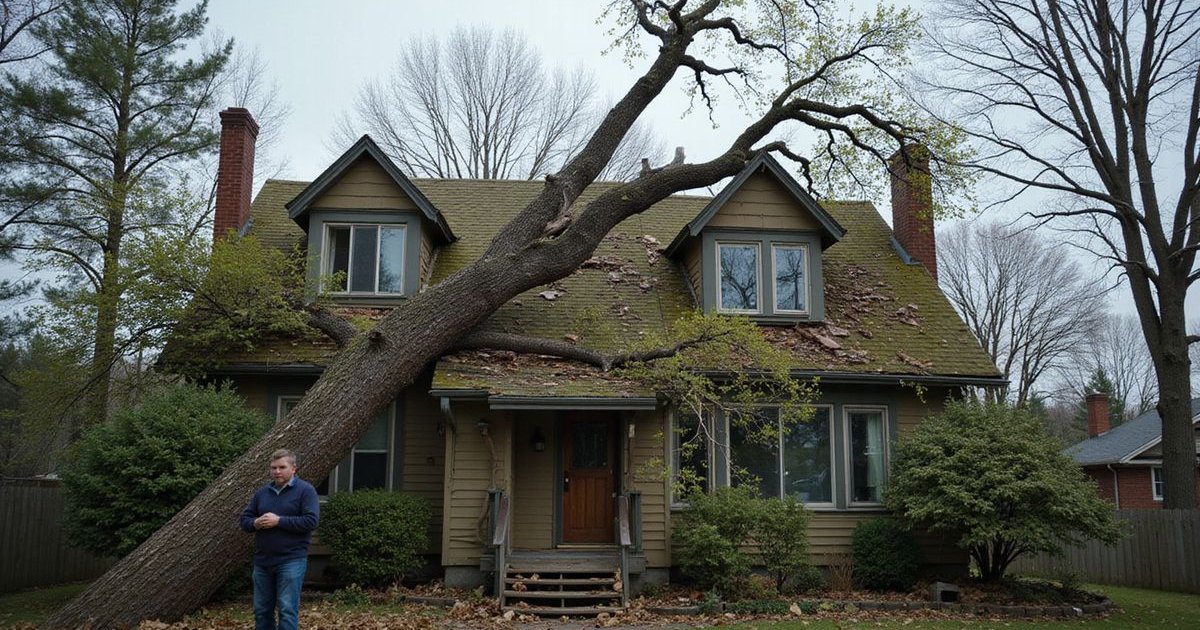
The “Ash Snap” Hazard Ash wood has a unique characteristic: it becomes incredibly brittle very quickly after it dies. Unlike an elm or oak that might stand dead for years, a dead ash tree can snap at the base or drop large limbs unexpectedly within 1-2 years of death.
Safety consideration for Duluth: Given our steep terrain and frequent high winds coming off Lake Superior, a “zombie” ash tree is a major liability. Removing a live ash tree is a standard operation. Removing a dead, brittle ash tree is dangerous, complex, and significantly more expensive.
Proper Disposal in Duluth
Because of the quarantine, you cannot just haul ash wood to a cabin or campfire outside the zone.
- Do not move firewood: It is illegal to move hardwood firewood out of St. Louis County.
- Approved Disposal: Homeowners can take ash brush and logs to the WLSSD Yard Waste Compost Site on Courtland Street. They have specific protocols to process this wood safely.
After removal, we recommend stump grinding to remove the habitat for other pests and prepare the ground for a replacement tree.
Developing an Ash Management Plan
Managing EAB is a marathon, not a sprint. We encourage homeowners to look at their property holistically rather than making panic decisions.
Step 1: Inventory. Count your ash trees. Measure their approximate width (diameter). Step 2: Triage.
- The “Keepers”: Large, healthy trees that shade your house or deck. Put these on a treatment list.
- The “Removals”: Small, struggling, or poorly placed trees. Plan to remove these over the next 1-3 years. Step 3: Replace. Start planting new trees now, even before the old ones are gone.
Best Replacement Trees for Duluth
Diversity is nature’s insurance policy. Do not plant more ash. Instead, consider these climate-resilient options that thrive in Zone 4b:
- Swamp White Oak: A “climate winner” that tolerates wet soil and is tough.
- River Birch: Great for wetter yards, fast-growing with beautiful peeling bark.
- Hackberry: Extremely hardy, native shade tree that handles wind well.
- Disease-Resistant Elms: Varieties like ‘Princeton’ or ‘Valley Forge’ bring back the classic elm look without the disease risk.
For more ideas on what to plant, read our guide on the best trees to plant in Duluth.
Community Impact and Resources
EAB affects all of us. The City of Duluth is actively managing thousands of boulevard trees, but private property makes up the bulk of our urban forest. When you manage your trees, you help slow the spread to your neighbors.
Helpful Local Resources:
- City of Duluth Parks and Recreation: For questions about boulevard or park trees.
- WLSSD: For current yard waste hours and disposal fees.
- Minnesota Department of Agriculture: For the most current quarantine maps.
Take Action Now
The worst thing you can do with EAB is ignore it. By the time you see the canopy die back, the internal damage is often irreversible. Whether you choose to save your trees or remove them, acting while the tree is still green saves you money and reduces risk.
Northshore Tree Service provides professional EAB consultations, trunk injections, and safe removal services for Duluth, Hermantown, and the North Shore. We use the latest data to help you make the right choice for your landscape.
Contact us today to schedule your assessment. If you are concerned about other issues in your yard, visit our tree health and disease treatment page to learn more.
Need Professional Tree Service?
Call our ISA Certified Arborist for a free estimate. Serving Duluth, MN and the North Shore.
Call (218) 555-0391