5 Common Tree Diseases in Duluth and How to Spot Them Early
It creates a perfect storm for fungi. Duluth’s unique position on Lake Superior, combined with our recent weather patterns—specifically the wet spring of 2024 followed by a snow-light winter—has created an environment where tree diseases are more than just a nuisance. We see them attacking the health of our urban canopy every single day.
Catching these issues early is the only way to save a high-value tree. A spruce identified with needle cast in its first year can almost always be saved with simple treatments. That same tree in year four might be a lost cause. We have compiled the five most common diseases affecting properties from Lakeside to the West End and detailed exactly how to identify them before the damage is permanent.
1. Rhizosphaera Needle Cast
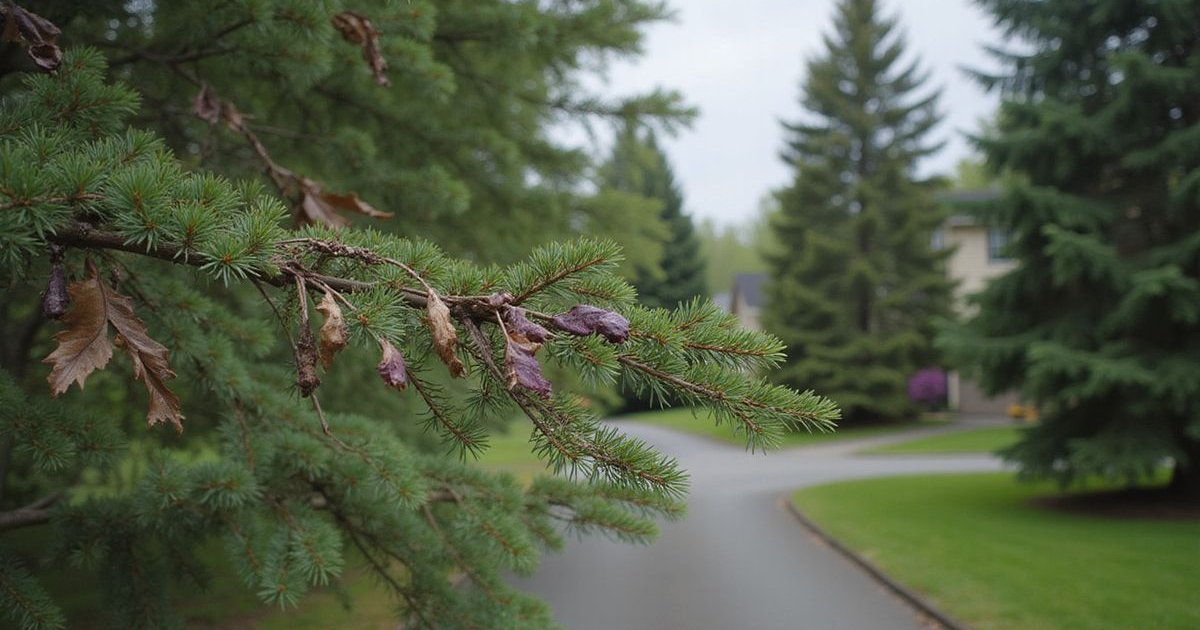
Rhizosphaera needle cast is the single most common ailment we treat in Duluth. It targets Colorado blue spruce and white spruce with aggressive efficiency. The fungus Rhizosphaera kalkhoffii attacks the needles, causing them to turn brown or purple and fall off. While it might look like a simple “browning” from the street, this disease will strip a tree bare from the bottom up if left unchecked.
How to Spot It
The “Year One” 10x Test. Early symptoms are nearly invisible to the naked eye. We recommend using a 10x magnifying hand lens to inspect green needles in late summer. You are looking for tiny black dots (fruiting bodies) emerging from the breathing pores on the needle’s underside. If you see rows of black dots, the tree is infected.
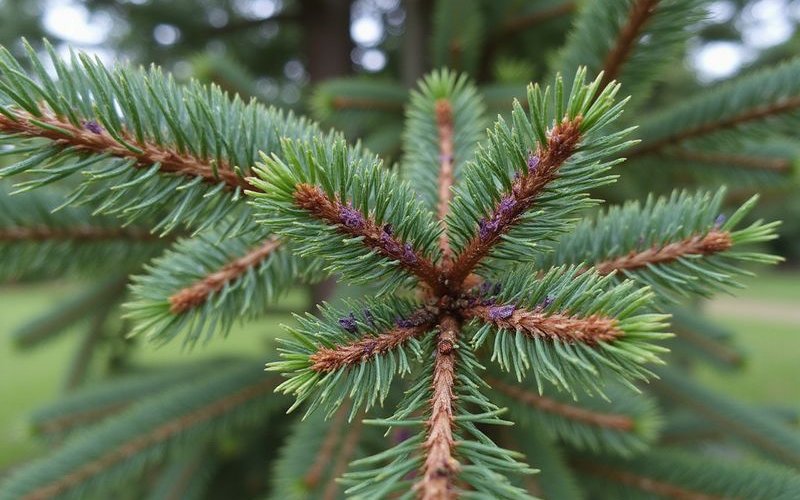
The “Inner Bareness” Warning. In the second year, the symptoms become obvious. Infected needles turn a distinct purplish-brown and drop off. This creates a “hollow” look where the branch tips remain green and healthy, but the inner branches near the trunk are completely bare.
Progressive Pattern. The disease almost always starts at the bottom of the tree where humidity is highest and works its way upward. A tree with a full green top and a dead lower half is a classic sign of advanced Rhizosphaera.
Why It Is Common in Duluth
Our proximity to Lake Superior keeps humidity levels high, which is exactly what this fungus needs to germinate. We see the highest infection rates in neighborhoods like Lakeside, Lester Park, and Congdon Park where mature spruce trees are often planted in dense rows. The heavy rains we experienced in early summer 2024 also fueled a spike in spore production that we are still dealing with today.
Treatment
Timing is everything. You must protect the new growth. Fungicide applications with active ingredients like chlorothalonil or copper hydroxide are highly effective, but only if applied at the right time. The critical window in Duluth is typically late May to early June, when the new needles are about half their full length (roughly 0.5 to 1.5 inches long). A second application is required 3 to 4 weeks later.
Commit to the process. This is not a one-time fix. Treatment usually requires two to three consecutive years of spring applications to fully control the fungus and allow the tree to regrow its foliage.
2. Dutch Elm Disease
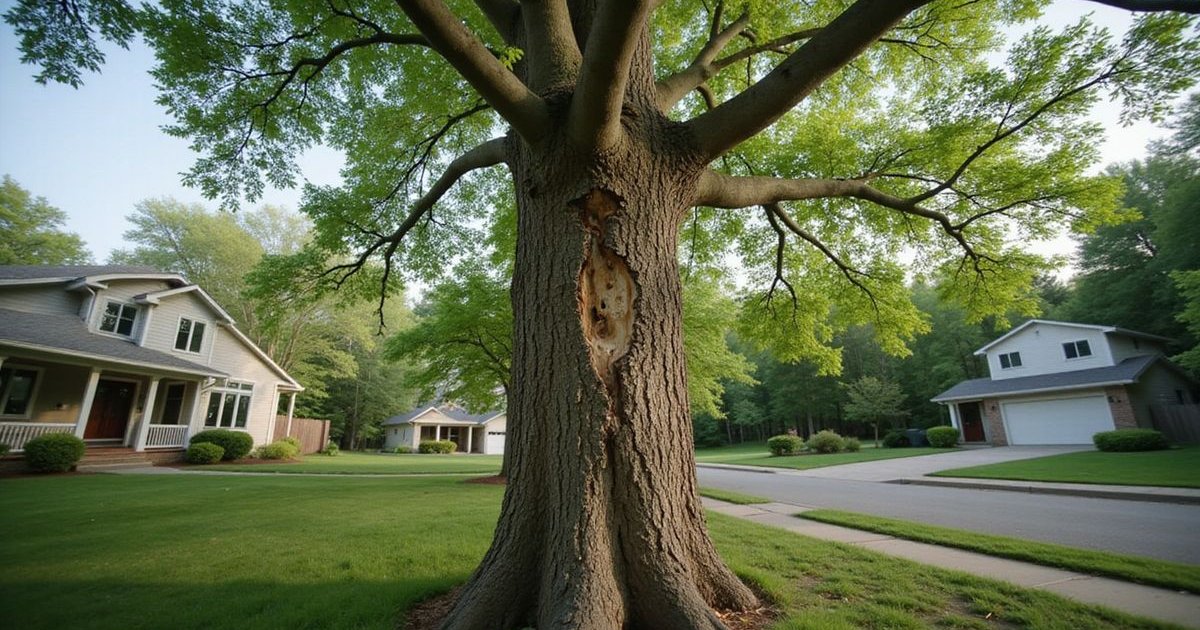
Dutch Elm Disease (DED) has already claimed 95% of Minnesota’s large elms, but the survivors are worth fighting for. The disease is caused by the fungus Ophiostoma novo-ulmi and is spread by elm bark beetles or through root grafts between neighboring trees. In Duluth, we still have significant populations of mature American elms in East Hillside and the Central Hillside areas that need protection.
How to Spot It
Flagging. This is the first reliable sign. Look for a single branch in the upper canopy that suddenly wilts and turns yellow or brown, usually in mid-June or July. This isolated “flag” against a green backdrop is a major red flag.
Vascular Streaking. If you prune a wilting branch and peel back the bark, you will see brown streaks or spots in the wood. Healthy elm wood should be creamy white. This brown discoloration is a definitive diagnostic sign.
The Cost Equation: Prevention vs. Removal
Many property owners hesitate to treat elms because of the upfront cost. We have found that for large, mature trees, treatment is often far more economical than removal.
| Factor | Preventive Injection (Treatment) | Tree Removal |
|---|---|---|
| Average Cost | ~$300-$600 (every 3 years) | $1,800-$4,000+ (one time) |
| Frequency | Every 3 growing seasons | Permanent loss |
| Value Impact | Maintains property value & shade | Reduces property value |
| Best Candidate | Healthy elms over 15” diameter | Dead or over 40% infected trees |
Treatment
Macro-injection is the gold standard. We use fungicides like propiconazole (Alamo) or thiabendazole (Arbotect) injected directly into the root flares. This provides protection for three years. It is a preventive measure, meaning it works best on healthy trees or those with less than 5% canopy damage.
Sanitation. If you see a dead elm in your neighborhood, report it. Prompt removal of dead wood reduces the breeding ground for the beetles that carry the fungus.
3. Cytospora Canker
Cytospora canker is a “stress disease.” It rarely kills a healthy tree outright but devastates trees that are already struggling. In Duluth, the targets are almost always Colorado blue spruce trees that are fighting our heavy clay soils or recovering from drought stress.
How to Spot It
The “Spilled Paint” Look. The most telling symptom is resin flow. Look for patches of white or bluish-white dried resin on the branches or trunk. It often looks like someone spilled a can of white paint or bird droppings on the bark.
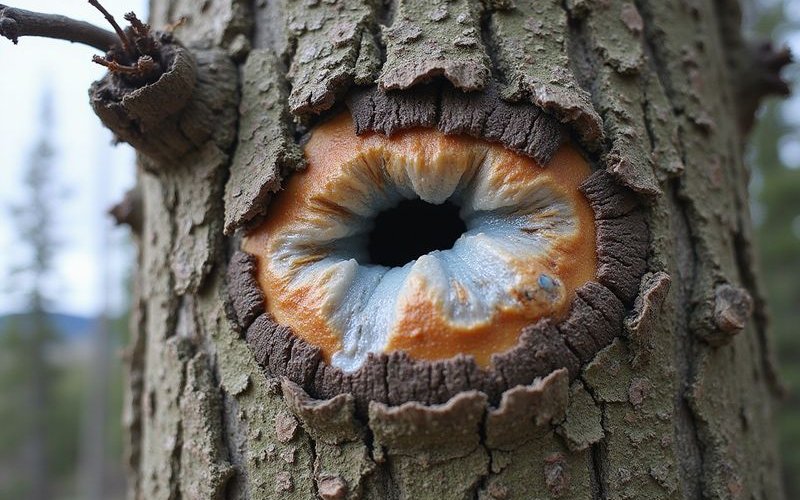
Lower Branch Dieback. Like Rhizosphaera, this disease starts low. But unlike Rhizosphaera, Cytospora kills the entire branch, not just the inner needles. The brown needles will often hang on the dead branch for months before falling.
Why It Is Common in Duluth
The Drought Connection. The dry autumn of 2024 and the lack of insulating snow cover during the 2024-2025 winter caused significant root stress for many conifers. This weakens the tree’s natural defenses, allowing the Cytospora kunzei fungus to enter the bark. Trees planted in rocky or compacted soil—common in our hillside neighborhoods—are at the highest risk.
Treatment
Pruning is the only cure. There is no chemical treatment for Cytospora. You must prune out the infected branches. The cut should be made at least 4-6 inches below the canker into healthy wood.
Winter is the best time. We recommend pruning these branches in late winter (February or March) when the fungus is dormant and the weather is dry. If you must prune during the growing season, do it only during a dry spell and disinfect your tools with 70% rubbing alcohol between every single cut to avoid spreading the spores.
4. Fire Blight
Fire blight is a bacterial infection that strikes quickly and can kill a young tree in a single season. It affects members of the rose family, which includes the crabapples and mountain ash trees that line so many Duluth driveways.
How to Spot It
The Shepherd’s Crook. This is the classic sign. New shoots wilt rapidly and curl over at the tip, resembling a shepherd’s staff or a candy cane. The leaves turn black or dark brown but stay attached to the branch.
Scorched Appearance. True to its name, an infected tree looks like someone took a blowtorch to sections of the canopy.
Variety Selection: Plant This, Not That
The best defense against fire blight is choosing the right tree from the start. If you are planting a new crabapple in Duluth, avoid older, susceptible varieties.
| Highly Resistant (Plant These) | Highly Susceptible (Avoid These) |
|---|---|
| Red Baron (Zone 4 hardy) | Zestar! (Apple) |
| Prairie Spy | Honeycrisp (Apple) |
| Chestnut Crab | Pink Spire (Crabapple) |
| Haralson | Snowdrift (Older plantings) |
Treatment
The 12-Inch Rule. When pruning out fire blight, you cannot just cut at the visible line of damage. The bacteria often extend far into the seemingly healthy wood. You must cut at least 12 inches below the visible canker or dead tissue.
Sanitize consistently. This bacteria is highly contagious. Dip your pruning shears in a 10% bleach solution or spray them with Lysol/alcohol between every cut. If you skip this step, you are simply inoculating the rest of the tree with the disease.
5. Anthracnose
Anthracnose is a group of fungal diseases that look terrible but are rarely fatal. In Duluth, we see this most often on ash, oak, and maple trees. It thrives in cool, wet springs, which means the weather patterns of early 2024 caused a major flare-up that many homeowners are still noticing.
How to Spot It
Leaf Distortion. Infected leaves will curl, cup, or twist as they grow. You will see irregular tan or brown blotches that follow the veins of the leaf.
Early Leaf Drop. In severe years, an ash or maple might drop a significant portion of its leaves in June. This can be alarming, but the tree will typically push out a second flush of leaves by mid-summer.
Treatment
Don’t panic. For most large, established shade trees, anthracnose is a cosmetic issue. It does not require chemical treatment. The tree has enough energy reserves to withstand the temporary leaf loss.
Focus on sanitation. The fungus overwinters in the fallen leaves. Raking and removing leaves in the fall is the most practical way to reduce infection for the following year.
Support the tree. Since the tree has to use extra energy to regrow leaves, help it out. Ensure it gets 1 inch of water per week during dry spells and consider mulching the root zone to retain moisture.
When to Call a Professional
Identifying tree diseases accurately is challenging because symptoms often overlap. A “browning spruce” could be suffering from Rhizosphaera, Cytospora, spider mites, or simple drought stress. The treatment for each is completely different.
If you notice progressive dieback, resin oozing, or rapid wilting, you need a diagnosis before you spend money on treatments.
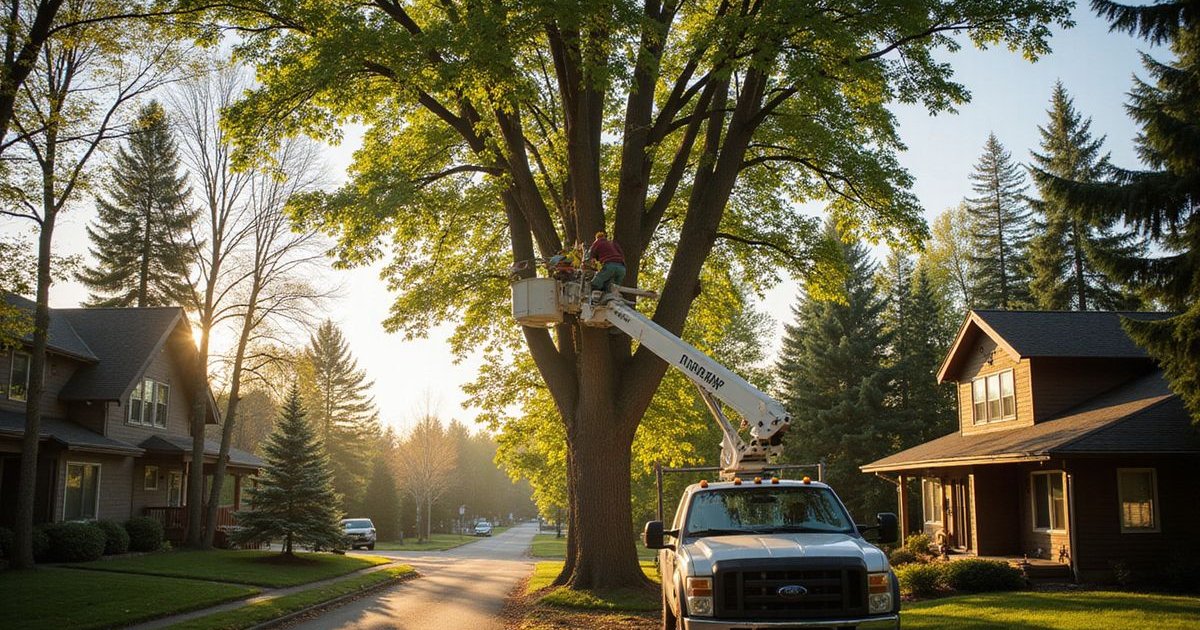
Northshore Tree Service provides comprehensive tree health and disease treatment services throughout Duluth, Hermantown, Proctor, and the North Shore. Our ISA Certified Arborist team understands the specific micro-climates of our region and can recommend a plan that saves your trees and your budget.
For more detailed information about other local threats, read our guides on the emerald ash borer in Duluth, birch decline on the North Shore, and oak wilt prevention in Minnesota.
Contact us today for a free tree health consultation. We can help you protect the landscape you love.
Need Professional Tree Service?
Call our ISA Certified Arborist for a free estimate. Serving Duluth, MN and the North Shore.
Call (218) 555-0391