Why Are Duluth's Birch Trees Dying? Understanding Birch Decline
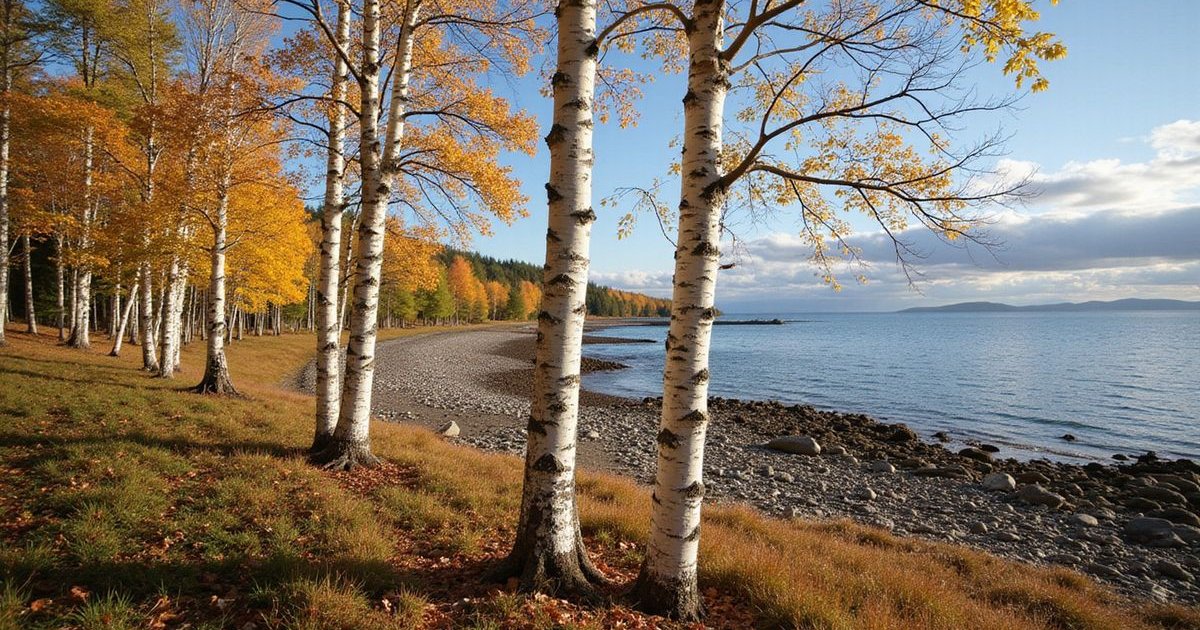
If you live in Duluth or have a cabin up the North Shore, you’ve likely seen the shift firsthand. The paper birch trees that define our ridge lines—shimmering white bark against a blue Lake Superior backdrop—are struggling. Stands that appeared vibrant just a few years ago are now marked by thinning crowns, dead tops, and in many neighborhoods, total collapse.
We see this daily as an ISA Certified Arborist team serving St. Louis County. Birch decline is currently the number one inquiry coming into our office. Homeowners are watching these iconic trees fade and want to know if they can be saved or if it’s time to replant.
The reality is that birch decline isn’t a single disease you can “cure” with a spray. It is a complex stress reaction driven by our changing local climate, specific soil conditions, and opportunistic pests.
What Is Birch Decline?
Birch decline is a “death by a thousand cuts” syndrome rather than a sudden infection. It occurs when environmental stressors weaken a tree’s natural defenses, leaving it exposed to secondary killers that a healthy tree would easily repel.
Manion’s “Spiral of Decline” is the model arborists use to explain this process:
- Predisposing Factors: Long-term stressors like poor soil volume or old age set the stage.
- Inciting Factors: A trigger event, such as the flash droughts we’ve seen in recent summers, pushes the tree over the edge.
- Contributing Factors: The final blow comes from pests like the bronze birch borer or root fungi (like Armillaria), which finish off the weakened host.
This timeline explains why your tree might look fine one year and be half-dead the next. The damage has often been accumulating silently underground for seasons before the first branch dies.
Why Duluth’s Birch Trees Are Especially Vulnerable
Paper birch (Betula papyrifera) is a cold-climate species that evolved to thrive in the consistent moisture and cool soils of the boreal forest. Several modern factors in the Arrowhead region are converging to make life difficult for them.
Climate Stress and “Flash Droughts”
Our local climate data paints a clear picture. While total annual precipitation hasn’t dropped off a cliff, the pattern has shifted. We are seeing more intense rain events followed by longer, hotter dry spells.
Birch trees have incredibly shallow root systems—often entirely within the top 12 inches of soil. These roots dry out rapidly during those two-to-three-week dry stretches in July and August. Furthermore, rising overnight temperatures in Duluth mean trees aren’t getting the cool recovery period they need to metabolize sugars and repair cell damage from the day’s heat.
The Bronze Birch Borer Connection
The bronze birch borer (Agrilus anxius) is a native beetle, unlike the invasive emerald ash borer that gets all the headlines. It has always been here, co-existing with our forests.
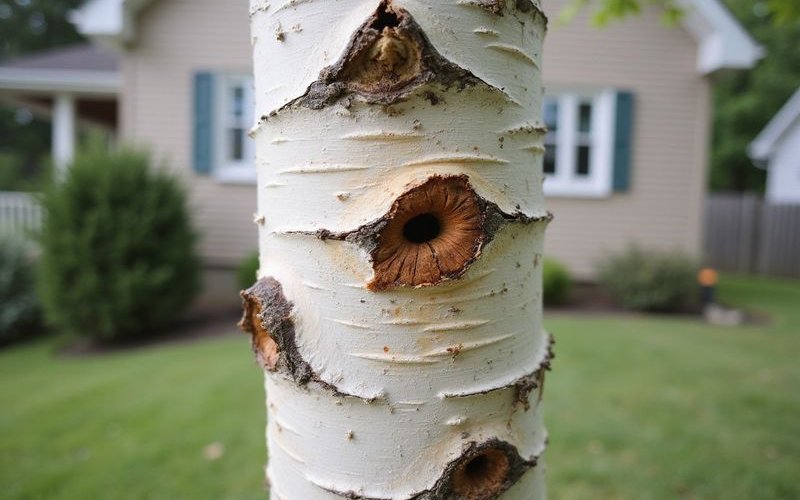
A healthy birch tree fights off this borer easily. When a larva tries to chew into the cambium, the tree produces a flush of sap that effectively drowns the intruder. But a drought-stressed tree cannot produce this sap pressure. The borer larvae survive, tunnel through the vascular tissue, and cut off the flow of water to the canopy.
We are seeing borer populations surge in Duluth because so many trees are drought-stressed, providing the perfect breeding ground.
Site and Soil Factors
Duluth’s geology is unforgiving. Many of our homes are built on the rocky hillside where topsoil is thin, often sitting directly on top of basalt bedrock. This limits the rooting volume available to trees, making them even more sensitive to heat and drought.
Urban heat islands amplify this stress. A birch tree planted near a south-facing driveway on London Road will experience soil temperatures 10-15 degrees hotter than a birch growing in the forest shade at Hartley Nature Center.
Recognizing Birch Decline on Your Property
Catching these symptoms early is the only way to reverse the spiral. Once a tree has lost 30-50% of its canopy, recovery is unlikely.
Symptom Progression Table
| Stage | Visual Symptoms | Action Required |
|---|---|---|
| Early Stress | Leaves are smaller than normal; canopy looks “see-through”; leaves turn yellow in August (early fall color). | Urgent: Deep watering and mulch immediately. |
| Active Decline | Dead branch tips in the upper 1/3 of the tree (flagging); heavy sprouting on the trunk (epicormic shoots). | Critical: Professional treatment assessment needed. |
| Advanced Failure | Large dead limbs (over 2” diameter); D-shaped holes in bark; ridged or lumpy bark on trunk. | Removal: Tree is likely structural hazard. |
The “D-Shaped” Smoking Gun: If you look closely at the bark on dying limbs, you might see exit holes shaped like a capital “D”. This confirms the bronze birch borer has completed its lifecycle and emerged.
What You Can Do to Help Your Birch Trees
You cannot control the weather, but you can control the micro-environment around your trees.
1. The “10-Gallon” Watering Rule
Most homeowners underwater their trees. A sprinkler running for 20 minutes wets the grass but barely penetrates the soil.
Our recommendation: During dry weeks, apply approximately 10 gallons of water for every inch of trunk diameter. If you have a 10-inch diameter birch, it needs roughly 100 gallons of water spread over the week.
Use a soaker hose coiled around the drip line (the outer edge of the branches) and let it run for 2-3 hours. This slow trickle allows water to seep deep into the clay and rocky soil without running off down the hill.
2. Mulch Correctly
Grass is a fierce competitor for water. Removing the turf under your tree and replacing it with wood chip mulch is one of the best health upgrades you can provide.
Apply a 3-4 inch layer of organic mulch (shredded hardwood or cedar) extending at least 3 feet from the trunk. Crucial tip: Do not pile mulch against the bark (“volcano mulching”). Keep it pulled back 6 inches from the trunk flare to prevent rot and rodent nesting.
3. Avoid Soil Compaction
Birch roots need oxygen as much as they need water. Parking cars or storing boat trailers under your birch tree compresses the soil pore space, suffocating the roots. Keep heavy traffic off the root zone.
4. Professional Tree Care
If your tree is special to you, professional intervention can stabilize it. Tree health and disease treatment protocols have advanced significantly.
Specific treatments we utilize include:
- Soil Injections: We can inject systemic insecticides like imidacloprid (for prevention) or dinotefuran (for faster uptake in active infestations) directly into the root zone.
- Growth Regulators: These treatments slow the tree’s canopy growth, encouraging it to put energy into root production and defense compounds instead.
- AirSpade Excavation: We use compressed air to loosen compacted soil around the roots without damaging them, then mix in compost and biochar.
Proper Pruning Timing
Timing is everything with birch. Do not prune birch trees in May, June, or July.
Fresh pruning wounds release volatile chemical scents that attract female bronze birch borer beetles from miles away. The safest window for trimming or pruning is late fall through winter (November to March), when the beetles are dormant.
When to Consider Removal
Sometimes the kindest choice is to remove a suffering tree before it becomes a liability. If your birch has lost more than 50% of its canopy, the vascular system is likely too damaged to transport water to the top, regardless of treatment.
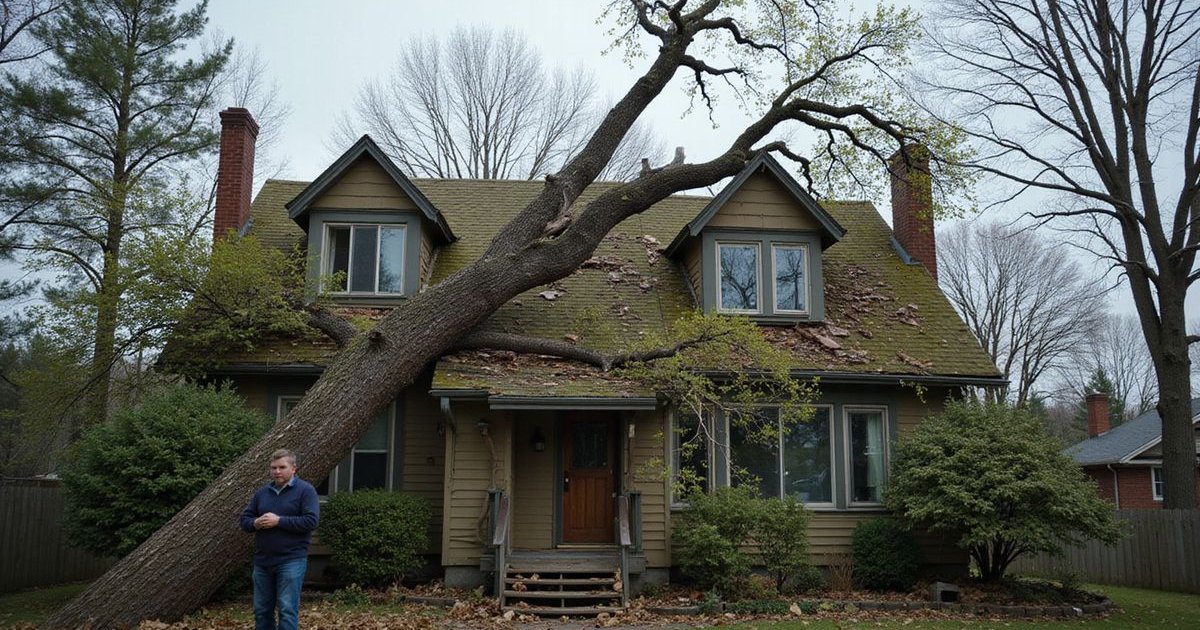
Dead birch wood rots incredibly fast. A tree that died last year may already be unstable, posing a risk to your roof or driveway during our notorious Lake Superior gales. Tree removal eliminates this hazard and clears the space for a more resilient successor.
Assessing the Aftermath
Once the tree is gone, stump grinding prepares the site for new life. For replanting, we now recommend “climate-smart” alternatives that keep the birch aesthetic but handle heat better:
- River Birch (Betula nigra): Specifically the ‘Heritage’ or ‘Dura Heat’ cultivars. They are resistant to borers and tolerate heat well, though they do require acidic soil (which most of Duluth has).
- ‘Whitespire’ Birch: A Japanese white birch variety that offers resistance to borers and maintains the classic white bark look.
- ‘Prairie Dream’ Paper Birch: A cultivar selected by NDSU for higher stress tolerance.
Check our guide on the best trees to plant in Duluth for more options.
The Bigger Picture
We are witnessing a slow-motion migration of the boreal forest. As our winters warm—up to 15 times faster than our summers, according to recent Minnesota climate data—the “comfort zone” for paper birch is moving north into Canada.
This doesn’t mean paper birch will vanish from Duluth tomorrow. But it does mean they are no longer a “plant it and forget it” tree. They require active stewardship, thoughtful site selection (north-facing slopes are best), and consistent care to survive in the urban landscape.
Professional Assessment Available
Unsure if your birch is just thirsty or in serious trouble? Northshore Tree Service provides detailed health audits for properties in Duluth, Hermantown, Two Harbors, and up the shore.
Our team can identify the specific pests or soil issues affecting your trees and outline a practical care plan. Contact us today to set up a consultation.
Need Professional Tree Service?
Call our ISA Certified Arborist for a free estimate. Serving Duluth, MN and the North Shore.
Call (218) 555-0391