Best Trees to Plant in Duluth, Minnesota (Hardy & Low-Maintenance)
Best Trees to Plant in Duluth, Minnesota (Hardy & Low-Maintenance)
Choosing the right trees for your Duluth property is one of the most impactful landscaping decisions you will make. A well-chosen tree provides decades of shade, beauty, and property value. A poor choice leads to constant maintenance, disease problems, and eventual removal costs.
We have planted and maintained trees across the Duluth area for years, seeing firsthand which species thrive and which struggle in our unique northern Minnesota climate. Duluth’s growing environment demands tough, well-adapted trees that can handle everything from rocky soil and steep terrain to heavy snow loads and Lake Superior’s distinct weather patterns.
Here are our top recommendations organized by category, along with the local knowledge you need to plant them successfully.
Understanding Duluth’s Growing Conditions
Before diving into specific species, it helps to understand what makes Duluth’s growing environment distinct.
Hardiness Zone 3b to 4b is the reality for our region, especially after the 2023 USDA map updates. While the official map pushes much of Duluth into Zone 4b due to recent warming trends, we always recommend planting for Zone 3 reliability. Lake Superior acts as a heat sink, creating warmer microclimates in neighborhoods like Lakeside and Congdon, while properties “over the hill” in Hermantown or Proctor often see significantly colder minimum temperatures.
The “Clay Bowl” Effect is a major challenge for many homeowners. A band of heavy red clay (often Amnicon clay) runs along the hillside and shoreline. Digging a hole in this clay and filling it with loose potting soil creates a “bathtub” that traps water and rots tree roots.
Wind exposure varies dramatically with topography. Hilltop properties along Skyline Parkway experience far more wind than sheltered valley sites, and Lake Superior generates its own persistent wind patterns that can desiccate sensitive evergreens in winter.
Short growing season of approximately 130 to 145 frost-free days limits the time trees have for active growth. Trees must harden off quickly in the fall to survive early freezes.
Best Shade Trees for Duluth
These large-growing trees provide substantial shade, structural beauty, and long-term property value.
Northern Red Oak (Quercus rubra)
The northern red oak is arguably the finest shade tree for Duluth properties. Native to our region, it is a long-lived, stately tree with excellent fall color ranging from russet to brilliant scarlet. Red oaks grow at a moderate rate, reaching 60 to 75 feet tall with a broad, rounded crown.
Why it works in Duluth: Hardy to Zone 3, tolerant of our rocky and acidic soils, and genuinely adapted to our climate. Red oaks handle Duluth’s winter conditions well and produce strong wood resistant to storm breakage.
Considerations: Susceptible to oak wilt, a deadly fungal disease moving north. Critical Rule: Never prune oaks between April and July when the disease-carrying beetles are active. Plant where the mature 50 to 60-foot crown spread has room to develop.
Bur Oak (Quercus macrocarpa)
The bur oak is the “bombproof” option for northern landscapes. Its thick, corky bark provides exceptional insulation against frost crack damage, and its deep taproot provides remarkable wind resistance. Mature bur oaks have a distinctive, rugged character with their deeply furrowed bark and massive spreading branches.
Why it works in Duluth: Hardy to Zone 2, making it the toughest oak species available. It tolerates the widest range of soil conditions, including the heavy alkaline clay found in some Duluth neighborhoods where Red Oaks might struggle.
Considerations: Slow growing, especially in youth. The large mature size (70 to 80 feet tall) requires significant space. It is best suited for larger lots in Hermantown or semi-rural properties rather than small urban lots.
Sugar Maple (Acer saccharum)
Sugar maple is beloved for its spectacular fall color, which ranges from brilliant orange to deep scarlet. In Duluth’s cool autumn climate, the color display is often exceptional. This is a large, long-lived tree that provides dense shade and elegant form.
Why it works in Duluth: Hardy to Zone 3 and native to our region. The dense canopy provides excellent summer shade, and the fall color is practically a trademark of the North Shore.
Considerations: Sugar maples are extremely sensitive to road salt. Do not plant this tree near the curb on busy streets like woodland or Arrowhead Road where winter salt spray is heavy. They also require well-drained soil and will decline in standing water.
Hackberry (Celtis occidentalis)
An underused tree that deserves far more attention from Duluth homeowners. Hackberry is a medium to large shade tree with a graceful vase shape, interesting corky bark texture, and outstanding toughness.
Why it works in Duluth: Hardy to Zone 2 and practically indestructible once established. It thrives in the compacted clay soils and urban pollution that kill less hardy trees. If you have a difficult site where other trees have failed, Hackberry is often the answer.
Considerations: Leaves turn a modest yellow in fall rather than a brilliant red. Small berry-like fruits attract birds but can be slightly messy on pristine patio surfaces.
| Tree Species | Best Soil Type | Growth Rate | Fall Color |
|---|---|---|---|
| Northern Red Oak | Rocky, Sandy, Loam | Moderate | Red/Russet |
| Bur Oak | Clay, Loam, Rocky | Slow | Yellow-Brown |
| Sugar Maple | Well-Drained Loam | Slow-Moderate | Orange/Red |
| Hackberry | Compacted, Clay, Poor | Moderate-Fast | Yellow |
Best Medium-Sized Trees
These trees provide scale and interest without overwhelming smaller yards.
Amur Maackia (Maackia amurensis)
A hidden gem for Duluth landscapes. This medium-sized tree reaches 25 to 35 feet tall with clusters of white, slightly fragrant flowers in mid-summer when few other trees are blooming. The exfoliating copper-brown bark is attractive year-round.
Why it works in Duluth: Hardy to Zone 3 and fixes its own nitrogen, allowing it to thrive in poor, thin soils where other trees starve. We often recommend this for difficult spots near foundations or paved areas.
Considerations: Relatively slow growing. It may take several years to begin flowering regularly. Availability can be spotty, so you may need to request it from local nurseries like Engwall’s.
Japanese Tree Lilac (Syringa reticulata)
One of the most popular small-to-medium trees in Duluth for good reason. Large, creamy-white flower clusters appear in late June, and the cherry-like bark provides winter interest. The ‘Ivory Silk’ cultivar is the standard for reliable structure and blooming.
Why it works in Duluth: Hardy to Zone 3 and a reliable bloomer. It adapts well to our heavy clay soils and tolerates urban conditions. The late bloom time bridges the gap between spring crabapples and summer perennials.
Considerations: Some years produce better blooms than others. Spent flower clusters persist through winter and can look untidy to some eyes. It benefits from occasional pruning to maintain a clean form.
Ironwood (Ostrya virginiana)
A native understory tree that grows to 25 to 40 feet with a graceful, rounded form. The hop-like seed clusters and delicate branching pattern provide three-season interest, and the extremely hard wood resists storm breakage.
Why it works in Duluth: Native to our forests and hardy to Zone 3. It tolerates shade better than almost any other deciduous tree, making it perfect for planting under the canopy of larger, older pines.
Considerations: Slow growing, especially in youth. It prefers well-drained soil and may struggle in heavy clay without amendment.
Best Ornamental Trees
Smaller trees that provide color, flowers, and four-season interest.
Serviceberry (Amelanchier species)
Serviceberries are among the most versatile small trees for Duluth, offering white spring flowers, edible blue-purple berries in summer, excellent orange-red fall color, and attractive bark in winter. The ‘Autumn Brilliance’ hybrid is particularly successful here, resisting leaf spot better than wild varieties.
Why it works in Duluth: Native heritage, hardy to Zone 3, and virtually pest-free. It provides crucial food for early pollinators and summer birds.
Considerations: Birds compete vigorously for the berries, which can stain light-colored paving. Fireblight can occasionally affect serviceberries during wet springs, though it is rarely severe.
Crabapple (Disease-Resistant Cultivars)
Crabapples remain popular in Duluth, but variety selection is critical. Modern cultivars like ‘Prairifire,’ ‘Royal Raindrops,’ and ‘Gladiator’ resist the apple scab and fire blight problems that plague older varieties.
Why it works in Duluth: Hardy to Zone 3 or 4 depending on the cultivar. They offer spectacular spring flowers and attractive fruit for winter bird feeding.
Considerations: Insider Tip: If you want the flowers without the mess, look for the ‘Spring Snow’ cultivar. It is sterile and produces almost no fruit, making it perfect for patios and driveways where crushed berries would be a nuisance. Avoid older varieties like ‘Radiant,’ which often lose their leaves by August due to fungal disease.
Best Evergreen Trees
Evergreens provide year-round structure, winter color, wind screening, and wildlife habitat.
White Spruce (Picea glauca)
The white spruce is one of the most reliable evergreen trees for the Duluth area. Native to our boreal forest, it grows 40 to 60 feet tall with a classic conical form. For a denser, more ornamental look, we strongly recommend the ‘Black Hills’ variety (Picea glauca var. densata).
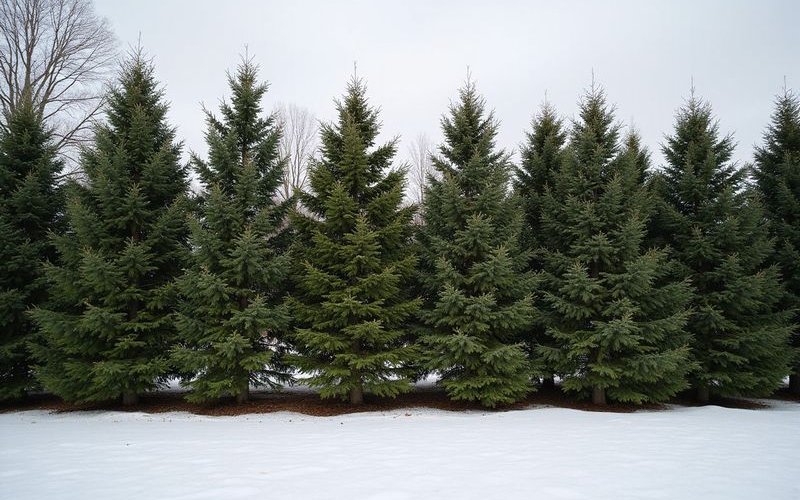
Why it works in Duluth: Hardy to Zone 2 and better adapted to our conditions than non-native species. The ‘Black Hills’ variety is slower growing but holds its needles longer and forms a superior visual screen.
Considerations: Susceptible to spruce budworm, which is currently active in NE Minnesota. However, it is generally more resilient than Balsam Fir. It prefers full sun and moist, well-drained soil.
White Pine (Pinus strobus)
Minnesota’s state tree and a beautiful landscape specimen. White pine grows to 50 to 80 feet tall with graceful, soft-textured foliage and a distinctive open, layered crown at maturity. The long, soft needles move beautifully in the wind.
Why it works in Duluth: Hardy to Zone 3 and fast-growing for an evergreen. Mature white pines have a magnificent silhouette that defines our northern landscape.
Considerations: Deer protection is mandatory. Whitetail deer love to eat White Pine seedlings; you must cage them until the terminal bud is out of browse reach (about 5-6 feet). Avoid planting near roads salted in winter, as the spray will turn needles brown.
Balsam Fir (Abies balsamea)
A classic northern Minnesota evergreen with dense, dark green foliage and the unmistakable fragrance associated with the north woods. Balsam fir grows 40 to 60 feet tall with a narrow, spire-like form.
Why it works in Duluth: Native and hardy to Zone 2. It is incredibly shade tolerant, allowing you to plant it in wooded areas where other evergreens would fail.
Considerations: Major Warning: St. Louis County is currently experiencing a significant Spruce Budworm outbreak. Balsam Fir is the primary host for this pest. While we love this tree, planting a large monoculture of them right now carries a higher risk of infestation. It also struggles on dry, exposed sites and needs cool, moist soil to thrive.
Trees to Avoid in Duluth
Just as important as knowing what to plant is knowing what to avoid to save yourself future headaches.
- Green Ash: Do not plant. The emerald ash borer is now present in St. Louis County. Any new ash tree you plant effectively becomes a future liability.
- Colorado Blue Spruce: While popular in the past, they are plagued by Rhizosphaera needle cast in our humid, lake-influenced climate. This fungal disease causes the inner needles to turn purple and drop, leaving the tree looking sparse and ugly.
- Silver Maple: Grows fast but produces weak wood that breaks in storms. Its aggressive surface roots can destroy sidewalks, driveways, and sewer lines.
- Amur Maple: Once a landscape staple, this tree is now listed as a “Specially Regulated Plant” in Minnesota because it is invasive and displaces native forest species.
- Bradford Pear: These are not reliably hardy in Zone 3/4 and have weak branch structures that split easily.
Planting Tips for Duluth Success
Choosing the right species is only half the equation. Proper planting ensures your new tree establishes successfully.
Plant high in clay soils. In Duluth’s heavy clay, digging a deep hole creates a waterlogged basin. We recommend planting your tree 1-2 inches higher than the surrounding grade and mounding soil up to the root ball. This encourages water to drain away from the trunk rather than pooling around it.
Water by volume, not time. “Sprinkling for 10 minutes” is useless for a tree. A newly planted tree needs about 10-15 gallons of water per week per inch of trunk diameter. During dry spells in July and August, you must provide this supplemental water, or the tree will enter winter stressed and vulnerable.
Identify the root flare. The most common mistake we see is planting too deep. You must be able to see the “root flare”—the curve where the trunk widens into roots—at the surface. If the trunk looks like a telephone pole going straight into the dirt, you need to gently remove soil until the flare is exposed.
Mulch effectively. Apply 3 to 4 inches of wood chips in a “donut” shape around the tree. Keep the mulch 3-6 inches away from the trunk itself to prevent rot and rodent damage. Wood chips (especially arborist chips) are superior to rock or rubber mulch because they improve soil quality as they decompose.
Need Help Choosing or Planting?
Selecting and planting the right tree for your specific site conditions can feel overwhelming. Factors like soil type, sun exposure, wind patterns, drainage, proximity to structures, and your aesthetic preferences all influence the best choice.
Northshore Tree Service offers planting consultation and tree selection guidance for homeowners throughout Duluth, Hermantown, Proctor, and the North Shore. As ISA Certified Arborists, we evaluate your specific site conditions—whether you’re on the clay hillside or the rocky shore—and recommend species that will thrive for decades.
We also provide ongoing tree health and disease treatment to protect your landscape investment and professional pruning to develop strong structure in young trees. Contact us for a free consultation and let us help you choose trees that will make your Duluth property more beautiful, more valuable, and more resilient for generations to come.
Need Professional Tree Service?
Call our ISA Certified Arborist for a free estimate. Serving Duluth, MN and the North Shore.
Call (218) 555-0391