The Best Time to Prune Trees in Duluth, Minnesota
The Best Time to Prune Trees in Duluth, Minnesota
Timing is everything in tree care. In Duluth, Minnesota, where we experience some of the most dramatic seasonal swings in the country, understanding the calendar is just as important as the cut itself.
You might have noticed how our recent winters have shifted, bringing unpredictable freeze-thaw cycles that confuse even the hardiest maples.
From what I’ve seen in the field, this volatility makes the “when” of pruning critical for preventing disease and structural failure.
So, I’m going to break down the exact timing for our local species, explain the biology behind these rules, and provide a clear schedule you can follow.
The General Rule: Late Winter Is Best
For most tree species in Duluth, the optimal pruning window is late winter to early spring, typically from late February through mid-April.
We aim for this sweet spot because trees are still dormant, but the deep freeze of January has passed.
There are several scientific and practical reasons why this specific window works best for our northern climate.
Trees Are Dormant
When a tree is dormant, pruning causes minimal stress because the tree is not actively growing or transporting sap. Energy reserves are safely stored in the root system during this time, meaning the removal of branches does not deplete the tree’s fuel for spring growth. A tree pruned in dormancy wakes up with a full tank of energy ready to seal the wound.
Disease Organisms Are Inactive
Most fungal pathogens and insect vectors that spread tree diseases are dormant during our cold months. Pruning wounds created in winter are less likely to become infected because the pests seeking entry points are not yet active. For example, the beetles that carry major fungal diseases are grounded by the cold, giving your trees a safety buffer that disappears once temperatures hit 50 degrees.
Better Visibility
Without leaves, the branch architecture of deciduous trees is fully visible. We can clearly see structural defects like “included bark,” crossing branches, and weak attachments that are hidden by summer foliage. This visibility allows for more precise cuts that improve the tree’s long-term structure rather than just its outer shape.
Faster Wound Closure
When pruning is done just before spring growth begins, the tree’s wound compartmentalization process activates almost immediately. Research from the University of Minnesota shows that wounds created in late winter close significantly faster than those made in fall or early winter. This rapid response minimizes the time the inner wood is exposed to the elements.
In Duluth, our winters are long enough that we have a generous window for dormant pruning. Ground conditions from late February through April usually allow us to access trees without compacting the soil, although heavy snow years can sometimes limit accessibility.
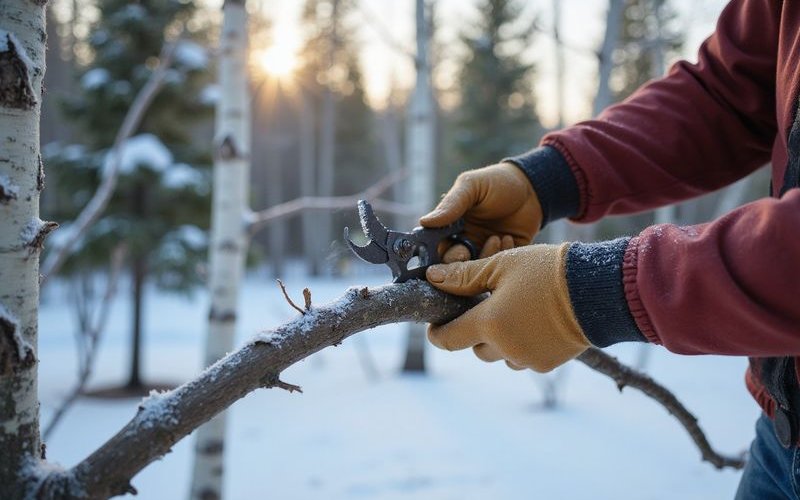
Species-Specific Pruning Timing
While the late winter rule applies to roughly 80% of our trees, the remaining 20% have strict biological exceptions. Ignoring these species-specific rules is the most common cause of preventable tree death we see in the Northland.
Oaks: November Through March Only
Oak pruning timing is the single most critical rule in Minnesota arboriculture. Oaks should only be pruned from November through March. This strict prohibition is due to Oak Wilt, a lethal fungal disease caused by Bretziella fagacearum.
The disease is spread by sap-feeding beetles (Nitidulidae) that can smell fresh sap from a pruning wound within minutes. These beetles are active from April through July, with their peak activity in May and June. If you prune an oak during this window, you are effectively ringing a dinner bell for these disease-carrying insects.
The “15-Minute” Rule If an oak must be pruned during the restricted period—for instance, after severe storm damage—you cannot wait. We treat the wound with a water-based latex paint or shellac within 15 minutes of the cut. This is the only scenario where we recommend wound dressings; in this specific case, the paint creates a physical barrier that stops beetles from accessing the sap.
Duluth has a significant population of Red Oaks and Bur Oaks that are vital to our urban canopy. Learn more about this disease in our oak wilt prevention guide. Protecting them requires absolute discipline with the calendar.
Elms: November Through March Only
Similar to oaks, elms have a strict disease-related pruning restriction. Dutch Elm Disease (DED) is spread by elm bark beetles carrying the fungus Ophiostoma novo-ulmi. The Minnesota Department of Agriculture recommends that elms be pruned only during the dormant season, from November through March.
This rule applies to all elm species, including:
- American Elm
- Siberian Elm
- Hybrid varieties
We still have magnificent surviving American Elms in Duluth that predate the DED epidemic. Keeping these veterans alive means strictly avoiding any cuts during the growing season when beetles are flying.
Maples: Late Winter, Avoid Spring
Maples technically tolerate pruning at any time, but there is a major practical reason to avoid early spring. Sugar Maples and Red Maples utilize internal pressure to push sap up the trunk, which can reach 20-40 PSI during the spring thaw. Pruning during this sap flow period—typically March through mid-April in Duluth—results in “bleeding” cuts that can drip for weeks.
While this sap loss rarely harms a healthy tree, it creates a sticky mess that stains siding, patios, and cars. We prefer to prune maples in midwinter (January through February) before the sap starts moving, or in late spring after the leaves have fully expanded. Once the leaves are out, the internal pressure equalizes, and the bleeding stops.
Birch: Late Summer to Fall
Paper Birch and Yellow Birch are iconic to our region, but they are highly sensitive to timing. The best time to prune birch is late July through October. Like maples, birch trees bleed heavily if pruned in spring.
More critically, they are the primary target of the Bronze Birch Borer (Agrilus anxius). These beetles are most active in Northern Minnesota from late May through mid-July. Pruning during their flight period releases volatile compounds that attract females looking for a place to lay eggs.
We wait until late summer when the adult beetles are gone. This timing also allows the wounds to begin sealing before winter dormancy sets in, giving the tree a head start on recovery.
Fruit Trees: Late Winter to Early Spring
Apple, crabapple, and other fruit trees thrive when pruned in late winter to early spring, typically late February through early April. This timing allows us to aggressively shape the tree and remove water sprouts without stimulating unwanted fall growth. It also helps manage fungal pathogens like apple scab by removing infected wood before spores are released.
The Goal: An Open Center For most fruit trees, we aim for an “open center” or vase shape. This structure allows sunlight and airflow to reach the inner branches, which increases fruit production and reduces fungal issues. Avoiding fall pruning is essential here; cuts made in autumn can stimulate new, tender growth that will freeze and die during winter.
Conifers: Late Winter or Early Summer
Pines, spruce, and fir trees have different growth habits than deciduous trees. For general structural correction or deadwood removal, late winter dormant pruning is effective. However, controlling the size of pines requires a specific technique called “candling.”
The Candle Technique Pines are best pruned in June, just as the new growth “candles” are extending. We pinch or shear these candles back by half to control the tree’s size and density for the current season. Unlike deciduous trees, pines will not generate new buds on old wood, so cutting back into the “dead zone” (branches with no needles) will result in a permanent stub.
Avoid pruning conifers in fall. Conifer resin flow slows down in cold weather, meaning fall wounds remain open and sticky all winter, increasing the risk of cytospora canker.
The Exception: Dead and Hazardous Branches
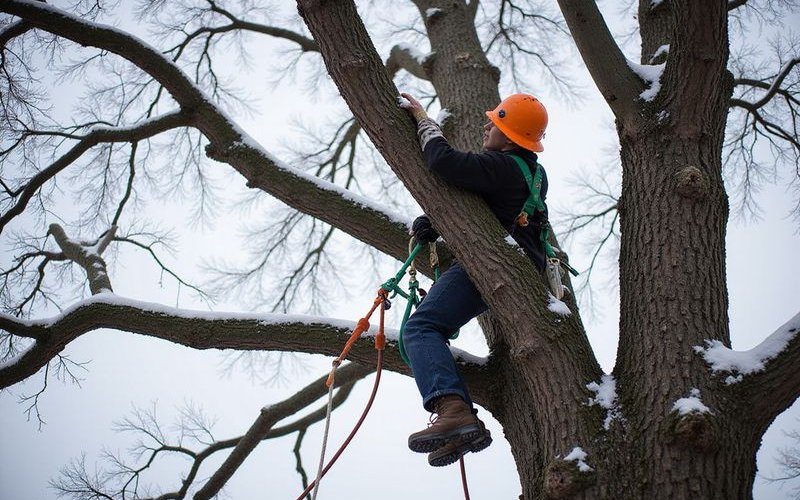
Safety always overrules the calendar. Dead, broken, and hanging branches should be removed immediately, regardless of the species or the season. Dead wood contains no living tissue at the cut point, so removing it does not release sap or attract pests.
The cut is made at the branch collar—the swollen area where the branch meets the trunk—which involves living tissue, but the risk of leaving a “widowmaker” in the tree far outweighs the risk of a single small wound. If a summer storm leaves a jagged, broken limb on your oak, we do not wait until November.
Emergency tree service teams operate year-round because hazardous limbs are a liability. We make a clean cut, apply sealant if it’s an oak or elm during the active season, and ensure the area is safe.
Month-by-Month Pruning Calendar for Duluth
To make this easier to track, we have compiled a quick-reference table for managing your property’s trees throughout the year.
| Month | Ideal For | Avoid | Notes |
|---|---|---|---|
| Jan - Feb | Dormant Pruning: Maples, Ash, Linden, Crabapple. | Birch (cold stress). | Best time for structural pruning. |
| March | Last Call: Oaks and Elms (finish by month’s end). | Maples (sap flow begins). | Monitor temps; stop if buds swell. |
| April - July | Restricted Period: Only deadwood removal. | Strictly No Oaks or Elms. | High risk for disease transmission. |
| June | Candling: Pines and Spruce. | Deciduous structural pruning. | Pinch candles to control size. |
| Aug - Oct | Birch Window: Best time for Paper/Yellow Birch. | Fruit trees (stimulates late growth). | Bronze Birch Borer flight is over. |
| Nov - Dec | Early Winter: Oaks and Elms window re-opens. | Conifers (slow wound sealing). | Great time for crown thinning. |
Our winter storm preparation guide offers more detail on how fall actions can prevent winter damage.
Why Timing Matters More in Duluth
Duluth’s climate poses unique challenges that standard gardening books often miss. Our Hardiness Zone has recently shifted to Zone 4b in many areas, but the “Lake Effect” from Lake Superior can still create microclimates that fluctuate wildly. A tree near the lake might stay dormant weeks longer than one “over the hill” in Hermantown.
These factors amplify the consequences of poor timing. Our short growing season means trees have less time to compartmentalize wounds before the next deep freeze. A wound created in October has to endure six months of freeze-thaw cycles, moisture, and wind before the tree can actively begin healing in May.
This harsh reality is why we are so conservative with our pruning schedule. Treating a Duluth tree like it lives in Minneapolis or Chicago is a recipe for decline.
Schedule Your Pruning at the Right Time
Understanding the calendar is the first step toward a healthier landscape. At Northshore Tree Service, our team plans every project around these biological windows to ensure your trees thrive for decades. We book our dormant pruning slots well in advance, as the late winter weeks are the most valuable time of year for arboriculture.
Contact us today to get your property on a professional pruning schedule. We will assess your species mix, check for structural issues, and lock in the dates that will deliver the best results for your specific trees. Your trees work hard to survive the Northland winters; they deserve care that works just as hard for them.
Need Professional Tree Service?
Call our ISA Certified Arborist for a free estimate. Serving Duluth, MN and the North Shore.
Call (218) 555-0391